Skip to content
The global refrigeration industryHolodPrice catalogue ↗

Everything shaping
the world of cooling.

EN Select language
РусскийEnglish

Refrigeration industry news

Technology, companies and events worldwide

Selected news 11

· Science & technologyClear filters ×
Science & technology

National Data Center Immersion Cooling Project Reaches 200 kW Demonstration Stage in Busan: Launch in June 2027

The consortium led by Samhwa Ace, working under the national project "Development and Demonstration of Ultra-Efficient Data Center Thermal Management Technology Using Immersion Cooling," presented Year-3 results and confirmed the Busan demonstration schedule at its second meeting (November 10, Korea Na Hotel, ~40 participants). Key parameters: 200 kW installation, 1,000 hours of operation in summer and winter, an absorption chiller driven by waste server water, and a target pPUE of 1.1. Installation at the LG CNS site is planned for March–April 2027, commissioning in May, and the main test in June.

Kharn
Science & technology

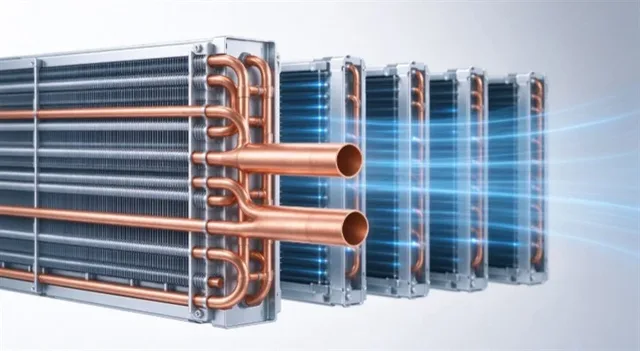
Narrowing Copper Tube Diameter to 4 mm: Xi'an Research Confirms 17% Cost Reduction Without Efficiency Loss

Professor Qian Suxin's team at Xi'an Jiaotong University presented findings at the 2026 China Home Appliance Technology Conference showing that optimizing a 1.5 HP outdoor heat exchanger from 5 mm to 4 mm tubes reduces copper cost by 17% and refrigerant charge by 95 g while maintaining heat exchange capacity and APF. The authors estimate that the 3–3.5 mm range may become the next critical threshold, though design and manufacturing complexity increases.

制冷快报
Science & technology

Humidity's Impact on Cooling Performance Depends on the Heat-Transfer Mechanism

The effect of relative humidity on cooling equipment varies fundamentally between evaporative and conventional air-cooled systems. For evaporative coolers, dry air maximizes performance, while conventional condensers are rated primarily on dry-bulb temperature and airflow. Engineers should apply manufacturer-specified rating conditions and correction methods rather than assume a universal humidity effect.

RACA Journal
Science & technology

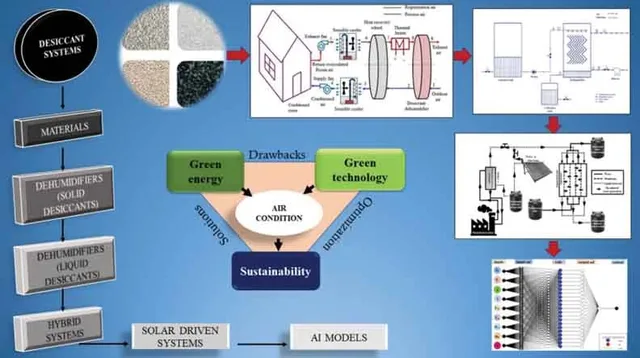
Desiccant Dehumidifiers: Separating Moisture from Temperature in Green Building Cooling

Desiccant dehumidifiers decouple latent and sensible cooling loads, allowing green buildings to regenerate desiccant materials with solar heat or industrial waste heat instead of grid electricity. The technology addresses the building sector's projected 122% increase in electric energy consumption by 2030 while supporting Net-Zero Energy Building criteria in hot and humid climates.

Cooling India
Science & technology

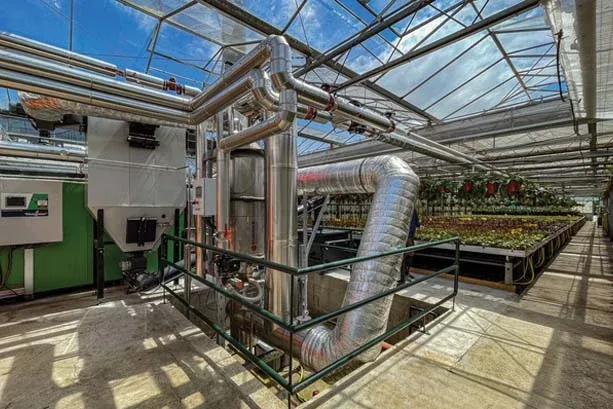
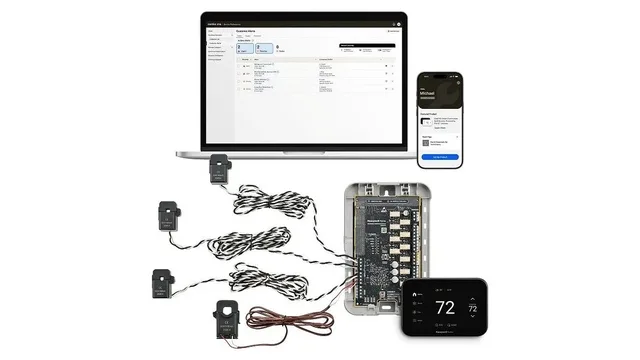
Integrated Humidity Management in Controlled-Environment Agriculture: From Transpiration to Dehumidification

Modern greenhouses and vertical farms must hold relative humidity within a 60–80% window to balance transpiration, nutrient transport, and disease risk. Achieving that balance requires an integrated stack of ventilation, heating, dehumidification, and sensor-driven automation tailored to crop type and local climate.

Cooling India
Science & technology

Review maps four technical pathways for atmospheric water harvesting and links refrigeration to SDG 6

A 2026 review in Applied Thermal Engineering outlines four approaches to extracting freshwater from air — condensation, sorption, radiative cooling, and hybrid systems — and highlights MOFs operating at 10–20 % relative humidity and a solar-powered thermoelectric prototype as key advances. The IIR's 60th Technical Brief positions refrigeration-based AWH as a contributor to UN Sustainable Development Goal 6.

IIR: sector monitoring
Science & technology

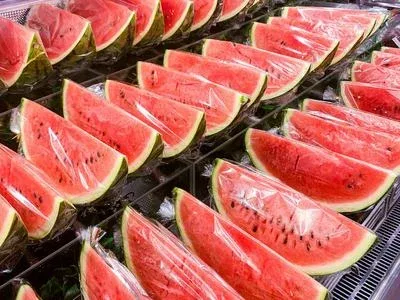
Review: Active Packaging Must Balance Atmosphere Control with Aroma Preservation in Refrigerated Fruits

A new open-access review in Foods examines how active packaging can preserve the sensory quality of fresh fruits during refrigerated storage, where low temperatures may suppress key aroma volatiles. The authors stress that every active-packaging function carries a dual effect on flavour and that system selection must account for fruit-specific physiology and a full safety-validation window.

IIR: sector monitoring
01

One industry, worldwide

Companies, research and refrigeration events across borders.

02

Sources in plain sight

Original sources help you explore the details and understand the context.

03

In your language

Available translations are linked on every story and reviewed by an editor.