Science & technology
National Data Center Immersion Cooling Project Reaches 200 kW Demonstration Stage in Busan: Launch in June 2027
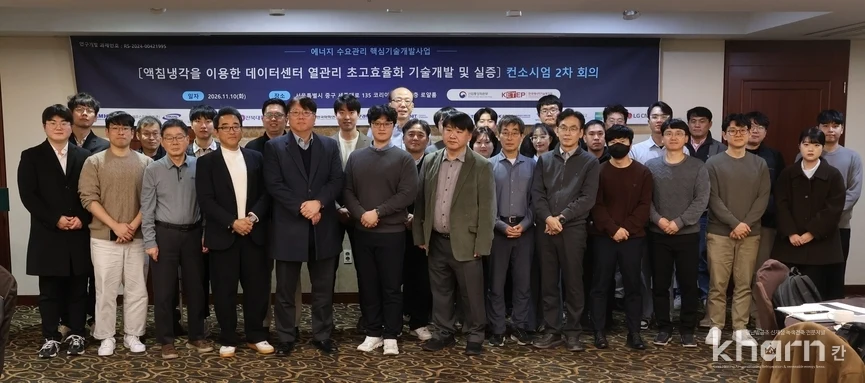
The consortium led by Samhwa Ace, working under the national project "Development and Demonstration of Ultra-Efficient Data Center Thermal Management Technology Using Immersion Cooling," presented Year-3 results and confirmed the Busan demonstration schedule at its second meeting (November 10, Korea Na Hotel, ~40 participants). Key parameters: 200 kW installation, 1,000 hours of operation in summer and winter, an absorption chiller driven by waste server water, and a target pPUE of 1.1. Installation at the LG CNS site is planned for March–April 2027, commissioning in May, and the main test in June.
Busan Demonstration: Scale and Schedule
The consortium of the national project "Development and Demonstration of Ultra-Efficient Data Center Thermal Management Technology Using Immersion Cooling" (led by Samhwa Ace) held its second meeting on November 10 at Korea Na Hotel; approximately 40 representatives from participating organizations attended. Year-3 results were presented and the Busan demonstration schedule was confirmed.
Planned parameters for the Busan installation:
- 200 kW capacity;
- 1,000 hours of operation in the summer period and 1,000 hours in the winter period;
- waste server water (hot water) used to drive an absorption chiller;
- heat recovered during regeneration directed to produce coolant for data center cooling;
- performance and energy consumption monitoring in both seasons.
Installation at the LG CNS site: January–February 2027 — container delivery; March–April — completion of construction and installation works; May — commissioning; June — start of the main test. Samhwa Ace is coordinating approval documentation and permits with LG CNS and developing piping and electrical equipment drawings.
Coolants and Immersion Circuits (Sub-project 1)
The lead organization for this sub-project is Zeus Yuhwa Industrial. Following a comparison of mineral oils, ester oils, and synthetic hydrocarbon oils from Year 2, the primary supplier for participants became a synthetic hydrocarbon non-conductive cooling fluid. In Year 3, a 200 L pilot stand was built for ester fluid synthesis and test coolant production; blending and large-scale synthesis tests were conducted on equipment exceeding 5 t. Zeus Yuhwa Industrial obtained UL certification.
After a 100-hour cycle on the Samhwa Ace test stand, coolant samples were compared with the original: properties remained largely unchanged. For sites where barrel handling is difficult, compact containers with barrel-type caps were developed to reduce the risk of moisture ingress through the neck.
Uniwide conducted 1,400 W heat-dissipation tests on two systems with real components, including GPUs. The test was performed at KTC (Korea Testing Certification) on a production floor; on October 13, Uniwide received the test report. To achieve the target power, the circuit was reconfigured from L2A to L2L; approximately 300 L of coolant was filled in the improved prototype. The next-series reservoir was fabricated from steel sheet instead of acrylic (following observation of splashing during simulated heat dissipation). The prototype features a control panel with status display and control functions. Over Year 3, Uniwide filed 5 patent applications and obtained 4 registrations; a 1,600 W test is planned for the next year, and prototype delivery to customers for PoC is under discussion.
KITECH (Korea Institute of Technology and Education) blended two types of coolant evaluated in Year 2 and identified a composition with enhanced thermal conductivity; a thermal conductivity test report for the mixture was obtained.
On the Samhwa Ace test stand, 6 simulated servers of 1 kW each (4 heaters of 250 W each) were installed in the reservoir. At a total thermal load of ~5.76–5.8 kW and a fixed coolant supply temperature of 35 °C, the outlet temperature reached ~40–45 °C. The fluid predominantly flows toward the rear of the reservoir; heater surface temperature depends on position. 24 thermocouples were installed at the upper, middle, and lower levels of the reservoir to measure temperature distribution. CDU modeling using a thermostatic bath and varying the pump load factor in the 30–70 % range is planned to compare flow rate and outlet temperature.
Jeonbuk National University investigated enhanced heat transfer using microbubbles and spray nozzles. Microbubbles rising from the bottom mix the fluid and disrupt the thermal boundary layer on the heated surface. During spraying, increased flow velocity raised the heat transfer coefficient. In the reservoir with microbubbles, the temperature difference between the upper and lower sections decreased; according to the researchers' estimate, under these conditions the power required for circulation could be reduced by ~30–40 % compared to pump circulation. In a coolant with SiO₂ nanoparticles (0.01 wt %), no sediment was observed; heat transfer properties of the sample will be evaluated in an accredited laboratory.
In a two-phase immersion test in a sealed chamber, a fan was installed to reduce the effect of non-condensable gases in the condensation zone. With the fan on, the heat transfer coefficient in the condenser increased by up to ~6 times compared to the fan-off condition.
Absorption Cooling and Waste Heat Recovery (Sub-project 2)
The lead organization is Samjung Tech. Year-3 target parameters: 25 kW cooling capacity and COP of 0.35 at a hot water temperature of 55 °C. The prototype is in production and being tested under target conditions. Compared to the equipment at the Ansan plant, the prototype is reduced by approximately 30 % in dimensions and weight.
KRI (Korea Research Institute of Chemical Technology) coated an adsorbent on a 1.5 kW heat exchanger. In comparative tests conducted by Samjung Tech, the iron-based MOF adsorbs ~10 % more moisture per unit mass than the aluminum-based MOF.
Hybrid cooler, 175 kW: at low ambient temperature, heat is rejected through the dry section; when greater heat rejection is needed, the wet section with water spray is activated. Samjung Tech estimates that replacing a sealed cooling tower would save ~55 % of makeup water per year and more than 30 % of electricity; performance is being verified during testing.
In March–April 2027, a 50 kW absorption chiller and a ~300 kW hybrid cooler are planned for installation at the LG CNS site; operational data will be collected on site, and a design with a reduced number of valves in the chiller is also under consideration.
KIM (Korea Institute of Machinery and Materials) fabricated a heat exchanger with coated adsorbent and a compact absorption chiller; parameters confirmed in the laboratory are being scaled up. With aluminum MOF at regeneration conditions of ~59 °C and coolant at ~30 °C, COP reached a maximum of ~0.6 (laboratory conditions; coolant temperature lower than field conditions; small-unit uncertainties accounted for). A 5 kW experimental absorption chiller was also fabricated; design and pipe diameters are being refined.
KIM participated in the heat exchanger calculation designed by D-MZ and registered software for calculation linking the liquid thermal management unit and the absorption system. D-MZ is designing a 125 kW heat exchanger and a test stand; together with KIM, a configuration for verifying heat exchange characteristics at the target power is being discussed. Testing a single 125 kW unit requires a sufficient heat source and test equipment; a separate-testing option was considered, but Samhwa Ace proposed a single-unit configuration. D-MZ and Samhwa Ace are coordinating the feasibility of testing a single heat exchanger on a mock-up; performance evaluation is planned for the next year.
SNIT developed a SCADA system for the Ansan mock-up: real-time data collection and equipment status monitoring. The analytics server compares energy consumption of modes achieving the target supply temperature and provides recommendations to the operator. Models of the CDU, dry cooler, and coolant circuit (FWS) were built. Data from the old system (periodic logging) and the new system (logging on value change) were aligned to a common time scale and measurement reference.
An annual calculation was performed for Ansan 2025 weather, IT loads of 50/75/100 kW, target FWS temperature of 20 °C, and a supply/return temperature difference of 10 K. The absorption chiller was excluded from the model comparison due to insufficient data. In the simulation, switching modes according to a scenario reduced energy consumption by an average of ~10 % compared to a fixed baseline mode; annual PUE was calculated at ~1.12. Next year, operational data from the Busan site will be collected for model refinement and integration with the upper-level system.
KRI is developing a powder MOF adsorbent regenerable at ~55 °C. The adsorbent coated on the heat exchanger adsorbs vapor from the evaporator, is regenerated by waste water, and the cycle repeats. In Year 2, candidates were selected; in Year 3, synthesis volume was expanded for 25 and 50 kW units. Water-resistance target: retention of at least 90 % of properties after exposure to boiling water. The aluminum MOF was synthesized and coated first; the iron-based MOF is harder to scale but has greater adsorption/desorption capacity, which is favorable for miniaturization. Testing on the 25 kW unit is ongoing; the 50 kW unit will require ~100–200 kg of adsorbent. Additional synthesis of 100 kg or more is planned, along with monitoring of coating losses and operational stability.
Pukyong National University modeled a cooling system linking an absorption heat pump, cooling tower, pre-cooler, and auxiliary compression chiller. In an annual simulation published in Applied Thermal Engineering, the model with the absorption heat pump consumed 33.53 % less energy for conditioning than without it.
KIM conducted a small experiment with aluminum MOF comparing pressure, heat of evaporation, and heat of regeneration against calculated values; the discrepancy between adsorption rate at the powder stage and in the actual unit was analyzed. To increase cooling capacity at low regeneration temperature, a two-stage absorption cycle was considered: silica gel on the auxiliary stage absorbs vapor released by the primary adsorbent, reducing desorption pressure. In the 55–65 °C regeneration range, the advantage of the two-stage cycle is greater the lower the heat carrier temperature; at 65 °C, cooling capacity per unit mass including the auxiliary adsorbent was lower than the single-stage configuration. Researchers plan to evaluate the effect of auxiliary adsorbent quantity and adsorption rate next.
Busan Installation and Integrated Testing (Sub-project 3)
The lead organization is Samhwa Ace. A mock-up approximately half the scale of the Busan installation was built in Ansan; a 100-hour summer cycle was completed. KRA (Korea Refrigeration and Air Conditioning Testing Research Institute) conducted heat rejection and energy consumption tests on the immersion reservoir and issued a certificate; prototypes of the reservoir and CDU were fabricated. Summer pPUE was 1.1; during the test period under the given ambient conditions, the chiller was not started. The 100-hour winter cycle in Ansan is ongoing; seasonal data will be incorporated into the Busan installation.
In Busan, the absorption chiller, hybrid cooler, machine room container, and server room container are being installed. The machine room container is separated to account for equipment layout and moisture ingress risk; a fan wall unit (FWU) selected for Busan ambient conditions is used for cooling inside the container.
Onion Software developed integrated software for continuous operation and thermal management of the immersion installation. Energy measurement parameters were defined and implemented in the prototype; the scope of application in Busan is being coordinated. Fault detection and failover functions were tested with an external expert. Energy data collection rate is ~620,000 events/s, exceeding the Year-3 target of 600,000 events/s.
At the test site in Giheung, internal temperatures of commercial servers are collected in real time; when a set CPU temperature threshold is exceeded, an alarm is displayed on the screen. CE compliance assessment: electromagnetic tests passed, remaining items in progress.
In Busan, IT equipment heat dissipation is simulated, and status and energy consumption of main equipment are monitored. Collection of internal temperatures of commercial servers and the thermal diagnosis function are planned to be verified on a separate test stand or in an accredited laboratory.
Woo Won M&I prepared layout and design drawings for the Busan installation: coolant, hot water, and cooling water piping are separated by system on the plans; the machine room is shown in section. Piping work cost (materials, fittings, labor) based on the drawings was estimated at ~120 million won; the largest share is the coolant and cooling water circuits with long runs and numerous branches.
Commissioning includes four stages: preliminary inspection, individual equipment tests, system tests, and performance verification. Procedures for monitoring reservoir outlet temperature, control stability, and PUE were defined; six emergency scenarios were prepared. On site, actual equipment and instrument locations are cross-checked against drawings, and data collection completeness is monitored; records of individual and integrated modes, as well as long-duration and emergency operation data, will be used for performance evaluation.
KETI (Korea Electronics Technology Institute) built a one-dimensional model of the circuit linking the 100 kW immersion reservoir and the external CDU of the Ansan mock-up, accounting for actual pipe lengths, branches, bends, the FWS circuit, and the buffer tank. Absorption heat pump test data and 100-hour pre-cooling data were compared with the model: fan performance results largely matched, while individual supply temperature values deviated. A flow meter reading deviation of ~8 % was identified and corrected; the heat exchanger specification will be supplemented. A surrogate model of the absorption heat pump, built from 16 operating modes, showed ~96 % accuracy in self-validation (Year-3 target: 95 %); results will be submitted for external review. In Busan, the model will be expanded based on P&ID and design documentation; before installation, an energy balance calculation and PUE forecast are planned, along with comparison of mode combinations at multiple target parameters.
KRA is developing standard test methods for immersion equipment and dry cooler performance; after review of the draft in a specialized committee, criteria and procedures will be supplemented. After testing the Ansan mock-up, KRA plans to assist in performance evaluation of integrated equipment, including the absorption chiller.
A measurement and verification (MMV) guide is being developed for the Busan demonstration: sensor locations, list of measured parameters, data collection scope, and verification methods. Coordination on instrument data is ongoing with SNIT, Onion Software, and Woo Won M&I. After construction is complete, operational records will be shared with participants; values are verified under identical boundary conditions; verified data are used for energy savings calculation.
The Korea Data Center Energy Efficiency Association refined the immersion cooling business model for data centers with in-house operations and developed a business model for commercial data centers; implementation conditions were verified with operators and experts. The association is participating in the preparation of a working document (WD) for the national standard on data center liquid cooling, considering international standards and OCP requirements; related content is reflected in international standardization discussions. In August, project results were presented at OCP Korea Tech Day; additional feedback is being gathered through a separate technical session block and expert consultations. Next year, the liquid cooling standard development process will continue: four expert advisory committee meetings, technical sessions, and conferences.
Hanbat National University integrated immersion cooling and waste heat recovery equipment into a single energy model. The effect of absorption heat pump COP variation on PUE was analyzed, and cooling circuit modes were compared. In a one-dimensional calculation, under certain liquid circuit conditions, PUE was ~1.05; results will be cross-checked with Busan demonstration data. Thermal regime forecast accuracy was estimated at ~98 % by the researchers; an accuracy assessment application was submitted to the Korean Society of Mechanical Engineers. Internal thermal and hydrodynamic processes were calculated in OpenFOAM; as field data become available, the model will be refined for rapid performance prediction at the design stage.
Source: www.kharn.kr.
ORIGINAL SOURCE
Kharn ↗Visit the original source for additional details.