Science & technology
Integrated Humidity Management in Controlled-Environment Agriculture: From Transpiration to Dehumidification
Modern greenhouses and vertical farms must hold relative humidity within a 60–80% window to balance transpiration, nutrient transport, and disease risk. Achieving that balance requires an integrated stack of ventilation, heating, dehumidification, and sensor-driven automation tailored to crop type and local climate.
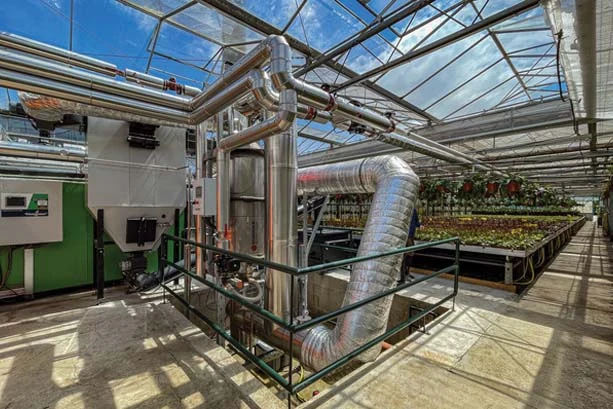
Precise humidity control is now a core requirement for greenhouses, vertical farms, and other Controlled-Environment Agriculture (CEA) operations, where it directly determines crop yield, quality, and energy consumption.
The 60–80% RH Window and What Happens Outside It
For most commercial greenhouse crops the recommended relative humidity (RH) sits between 60% and 80%, though the ideal value shifts with crop species, growth stage, and prevailing environmental conditions. Staying inside that band is a balancing act: too little moisture in the air and too much both damage the crop, just in different ways.
Low RH. When the surrounding air is dry, the vapour-pressure difference between the leaf interior and the atmosphere widens, and plants transpire faster than their roots can replace the water. The result is water stress: leaf wilting and curling, reduced leaf expansion, stomatal closure that chokes off CO₂ uptake, and a consequent drop in photosynthesis and biomass accumulation. Prolonged dry conditions also disrupt reproductive development—flower buds dry out and abort, causing blossom drop and poor fruit set in tomatoes, peppers, cucumbers, and strawberries. Fruits that do form tend to be smaller, of lower market quality, and unevenly matured, while overall plant stature is stunted with smaller leaves and weaker stems.
High RH. When RH exceeds roughly 85–90% for extended periods, the air is nearly saturated and transpiration slows sharply. Because nutrients such as calcium travel primarily through the transpiration stream, reduced flow produces localised deficiencies: tip burn in lettuce and other leafy vegetables, blossom-end rot in tomatoes and peppers, and poor tissue development in rapidly growing organs. Prolonged leaf wetness and condensation also create the conditions for fungal pathogens, notably Botrytis cinerea (grey mould) and powdery mildew.
Where the Moisture Comes From
Indoor humidity in a CEA facility is driven by several natural and operational sources:
- Plant transpiration – the largest and most continuous contributor. Typically 95–98% of the water a plant absorbs through its roots is returned to the air as vapour through stomata. The rate scales with leaf area, growth stage, temperature, light intensity, air movement, and Vapour Pressure Deficit (VPD); as the canopy matures, moisture release increases substantially.
- Irrigation – overhead sprinklers, misting, and fogging systems introduce water directly into the air and raise RH quickly. Drip irrigation, by contrast, delivers water to the root zone and minimises surface evaporation, helping keep humidity more stable.
- Soil evaporation – a continuous but smaller contributor.
- Outdoor air exchange – ventilation brings in air whose own humidity level can either add to or relieve the indoor load.
The Control Toolkit
No single technology covers all conditions; an effective strategy combines several layers.
Ventilation. Natural ventilation through roof and side vents exploits the stack effect and wind pressure to exhaust warm, moist air and draw in cooler, drier outside air. It is energy-efficient and simultaneously replenishes CO₂, but its performance is weather-dependent and drops in calm, high-humidity conditions. Mechanical ventilation—exhaust fans, intake fans, or forced-air systems—provides more precise and consistent control regardless of wind, making it the standard in large commercial greenhouses and enclosed facilities where natural ventilation alone is insufficient.
Heating. Heating does not remove moisture directly; it raises air temperature, which increases the air's capacity to hold water vapour and thereby lowers RH. This prevents condensation on surfaces and foliage. Heating is often paired with ventilation: air is warmed first, then exchanged with cooler outdoor air to remove excess moisture more efficiently. Common systems include hot-water pipes, unit heaters, radiant heating, and under-bench heating.
Dehumidification. Two main technologies are used:
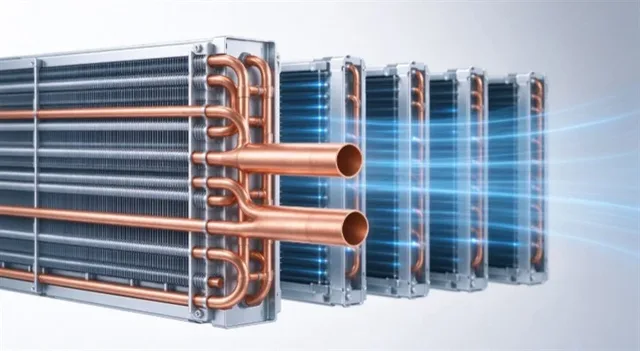
- Refrigeration (condensation) dehumidifiers pull humid air over cold evaporator coils; vapour condenses below the dew point, is collected as liquid, and the drier air is reheated and returned. They are simple and effective in small-to-medium facilities but lose efficiency at lower operating temperatures.
- Desiccant dehumidifiers use hygroscopic materials such as silica gel or lithium chloride to absorb moisture directly. Once saturated, the desiccant is regenerated by heating and reused. They maintain efficiency under low-temperature, high-humidity conditions, making them suitable for seed storage, propagation rooms, and vertical farms, though regeneration consumes more energy.
Humidification. When RH falls below the target, two systems add moisture:
- High-pressure fogging generates droplets typically under 20 micrometres in diameter that evaporate before reaching plant surfaces, raising humidity while providing evaporative cooling. It delivers uniform distribution, minimises leaf wetness, and is widely used in propagation houses, vegetable greenhouses, and floriculture, especially in hot, dry climates.
- Misting systems spray larger droplets and are common for seed germination, cutting propagation, and maintaining high humidity around young plants with underdeveloped root systems. Excessive operation, however, leaves water on leaves and growing media, raising the risk of fungal and bacterial disease, so timing and control are critical.
Automation and Energy Efficiency
Modern CEA facilities rely on automated control systems that continuously monitor temperature, RH, CO₂ concentration, solar radiation, and VPD via dedicated sensors. A central controller compares measured values against predefined setpoints and automatically operates ventilation fans, roof vents, heaters, cooling systems, humidifiers, dehumidifiers, shading, and irrigation. For instance, a temperature rise above the setpoint opens vents and activates fans; high RH triggers increased ventilation, heating, or dehumidification; low RH activates humidifiers or misting; soil-moisture sensors initiate irrigation; CO₂ sensors regulate enrichment; and radiation sensors manage shading or cooling. VPD-based control combines temperature and humidity to keep transpiration at a plant-appropriate level. These systems also provide data logging, alarms, remote monitoring, scheduling, and automatic setpoint adjustment, reducing manual intervention and improving energy, water, and resource efficiency.
On the energy side, several measures cut the load of maintaining the target climate:
- Heat-recovery ventilators capture useful heat from exhaust air.
- Heat-pump dehumidifiers remove moisture and recover part of the heat generated during dehumidification for space heating.
- Thermal curtains and improved envelope insulation reduce heat loss in cold periods, lowering heating demand.
- Variable-speed fans adjust airflow to actual environmental needs rather than running continuously at full capacity.
- Predictive controls use temperature, RH, VPD, weather forecasts, solar radiation, and irrigation schedules to anticipate humidity changes and operate equipment more efficiently.
As a best practice, RH and VPD should be monitored continuously to keep conditions suitable for growth and minimise fungal-disease and condensation risk. Prolonged periods above approximately 85% RH should be avoided, particularly when leaf or surface temperatures approach the dew point. Adequate air circulation eliminates stagnant, humid zones around plants, and irrigation should be coordinated with ventilation and dehumidification so that large moisture loads are not introduced when the facility has limited capacity to remove them. Finally, all environmental sensors—temperature, RH, CO₂, radiation—should be regularly inspected, calibrated, and maintained, because inaccurate readings can cause unnecessary operation of fans, heaters, humidifiers, or dehumidifiers, raising energy consumption while creating unsuitable growing conditions.
Author: Dipanwita Samaddar, Subject Matter Expert – HVAC, ZURU Tech India Pvt. Ltd.
Source: Cooling India.
ORIGINAL SOURCE
Cooling India ↗Visit the original source for additional details.