Science & technology
Review: Active Packaging Must Balance Atmosphere Control with Aroma Preservation in Refrigerated Fruits
A new open-access review in Foods examines how active packaging can preserve the sensory quality of fresh fruits during refrigerated storage, where low temperatures may suppress key aroma volatiles. The authors stress that every active-packaging function carries a dual effect on flavour and that system selection must account for fruit-specific physiology and a full safety-validation window.
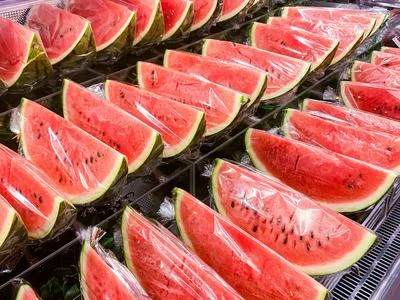
A review published in the journal Foods highlights a trade-off in refrigerated fruit storage: low temperatures slow visible deterioration but can suppress the formation and release of key aroma volatiles, so extending commercial shelf life does not automatically preserve eating quality. The authors, including IIR D1 commission member Ginés Benito Martínez-Hernández, examined how active packaging can mitigate this problem while maintaining food safety.
Refrigeration and aroma loss
After harvest, fresh fruits remain metabolically active, and their sensory quality continues to evolve throughout the supply chain. In packaged fruits, this evolution is shaped by the interaction between fruit physiology and the microenvironment created by the packaging. The review notes that packaging which maintains firmness but permits cold-induced depletion of key volatiles will extend shelf life without preserving eating quality. As a concrete example, postharvest chilling of melons can reduce the formation of volatile acetate esters essential to melon aroma, so refrigeration may weaken the sensory character of the product even when visual quality remains acceptable.
How active packaging works and its dual effect on flavour
Unlike passive packaging, which acts only as a barrier against the outside environment, active packaging regulates the internal atmosphere by absorbing or releasing gases and other compounds. It can control oxygen and carbon dioxide levels, ethylene accumulation, moisture, microbial growth, oxidation, and the release of bioactive compounds. The main benefits cited are extending shelf life, improving safety, reducing decay, limiting water loss, and maintaining overall fruit quality.
The researchers found that every active-packaging function has a dual effect on flavour. In refrigerated storage, the package must maintain an atmosphere that slows respiration and microbial growth without imposing excessive O₂ limitation or CO₂ accumulation, while also controlling water vapour to avoid condensation.
Selecting the right system
The packaging system must be matched to a set of fruit-specific parameters:
- species and cultivar
- maturity stage
- respiration rate
- climacteric or non-climacteric behaviour
- cut status
- storage temperature and expected temperature fluctuations
- headspace volume
- product load
Validation and safety requirements
Active packaging for fresh fruits should be validated within a safety window that covers technological efficacy, sensory compatibility, toxicological acceptability, food-contact compliance, and any applicable labelling or residue requirements. The authors stress that this is particularly important for systems that release active substances into the package atmosphere or onto the fruit surface, including:
- essential oils and plant-derived volatiles
- SO₂ emitters and ethanol emitters
- antimicrobial coatings
- active papers and active cardboard
- polymeric films containing active agents
- edible coatings
About the publication
The review was authored by a team from Eversia, the Polytechnic University of Cartagena, Universidad Católica San Antonio de Murcia (UCAM), the UCAM Agriculture and Climate Resilience Group, and the Institute of Natural Resources and Agrobiology of Seville. It is available in open access in Foods.
Source: IIR sector monitoring.
ORIGINAL SOURCE
IIR: sector monitoring ↗Visit the original source for additional details.