Cold chain
RaboResearch maps cold chain gaps behind China's 17.5% fruit import growth
A RaboResearch report published in November 2026 finds that China's fruit import volumes rose 17.5% year-on-year in 2025 while average import prices fell by more than 10%, highlighting structural gaps in pre-cooling, grading, and last-mile refrigerated distribution. The report outlines how food retailers can coordinate sourcing and invest in cold chain assets to close the gap, while cautioning that proprietary infrastructure requires sufficient operating scale.
China's fruit import volumes grew 17.5% year-on-year in 2025, yet the country's cold chain infrastructure has not kept pace, according to a RaboResearch report published on November 1, 2026. The report, Delivering freshness to consumers, Part I: How food retailers can shape China's cold chain development, examines how food retailers can respond to shifting consumer preferences and improve supply chain efficiency.
Import volumes up, prices down
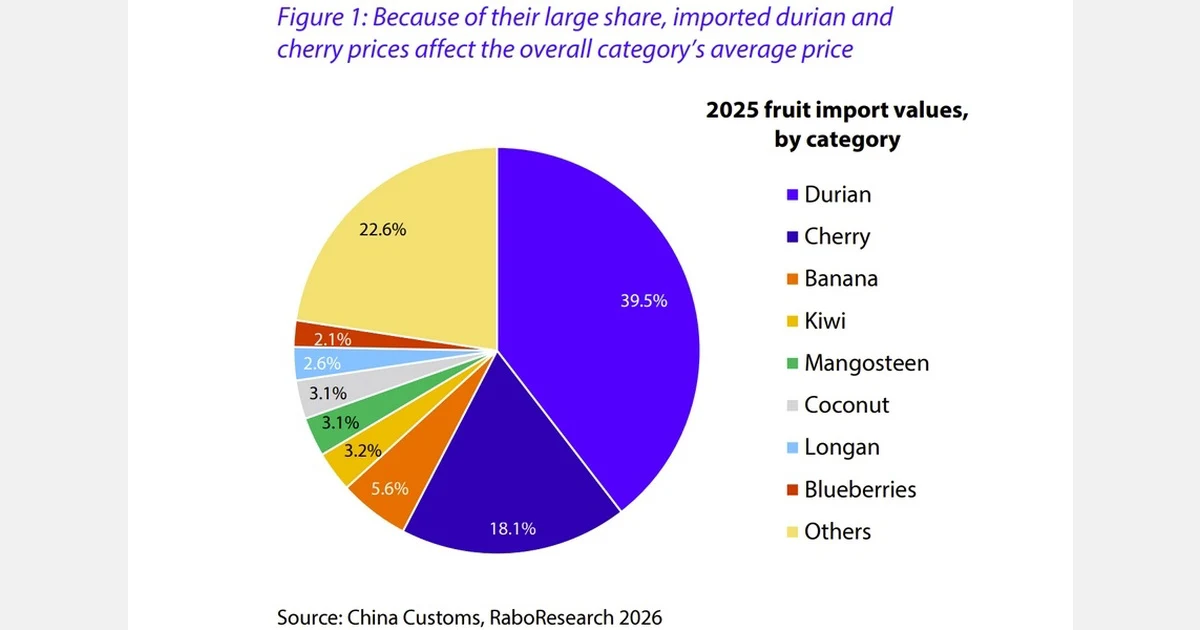
Average fruit import prices in China declined by more than 10% in 2025. Cherries recorded the steepest drop at 36%, followed by blueberries at 20% and durians at 12.6% (China Customs, RaboResearch).
Where the cold chain falls short
RaboResearch identifies several structural limitations in China's existing cold chain:
- insufficient pre-cooling and grading facilities;
- fragmented agricultural supply chains with multiple distribution intermediaries;
- resulting quality losses, higher costs, and reduced transparency.
Improved cold chain infrastructure could support wider distribution of imported fruit, particularly in lower-tier cities, while better temperature management, transport stability, and traceability would reduce spoilage and distribution costs.
Shifting consumer patterns and retailer strategies
Retailers increasingly need to accommodate smaller, more frequent orders, broader product assortments, and shorter delivery windows. RaboResearch notes that consumer demand data can help coordinate sourcing, processing, storage, and distribution. Direct procurement from growers and first-tier distributors could shorten supply chains, and investments in pre-cooling and grading infrastructure could improve product handling. The report also examines the role of centralized processing facilities and last-mile refrigerated distribution in meeting demand for fresh food and imported fruit.
Scale matters
The researchers caution that investment in proprietary cold chain infrastructure requires sufficient operating scale. Large retail platforms may be better positioned to develop integrated logistics networks, while smaller operators could rely on partnerships with third-party service providers. RaboResearch expects retailers to play a greater role in coordinating China's cold chain development as demand for freshness, delivery speed, and product quality continues to influence purchasing patterns.
For more information: Rabobank, email: [email protected], www.rabobank.com.
ORIGINAL SOURCE
FreshPlaza: Cooling ↗Visit the original source for additional details.