Chillers & heat pumps
Straight-Cool Air Conditioners, Not Furnaces, Are the Real Barrier to Residential Heat Pump Adoption
Nate Adams argues that the 4 to 5 million straight-cool ACs shipped annually in the U.S. lock homes out of heat pump heating for 10 to 20 years each. A hybrid approach—keeping the furnace and adding a heat pump—adds only $300 to $1,000 in wholesale equipment cost and under an hour of labor, while an October 2026 RMI analysis shows such mixes could fit roughly 65% more heat pumps into spare winter grid capacity and cut residential electricity rates by an average of 13%.
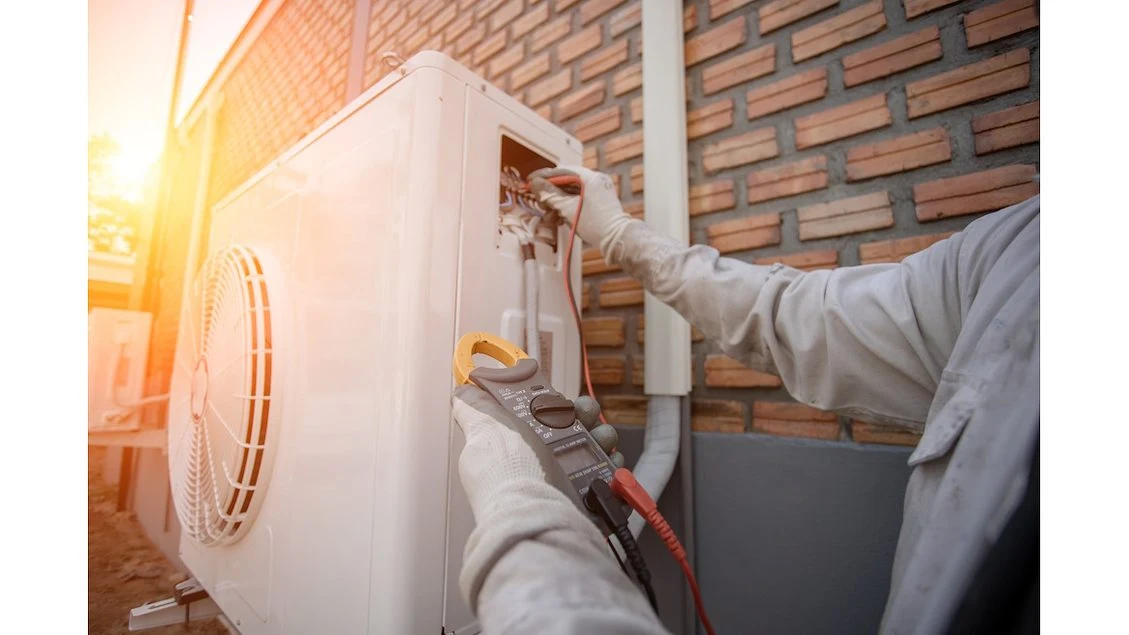
The straight-cool air conditioner, not the gas furnace, is the primary obstacle to residential heat pump adoption in the United States. Roughly 4 to 5 million straight-cool units ship every year in the U.S.—one every 6 to 8 seconds—and each replacement can lock a home out of heat pump heating for the next 10 to 20 years.
Heat pump share has gone flat after the destock illusion
From September 2025 through January 2026, heat pumps briefly outsold air conditioners, but that crossover was largely the R-410A destock: distributors had stocked up on R-410A units in 2024, sold them down through 2025, and stopped ordering. AC shipments from July through December 2025 came in around 1.6 million, against roughly 2.5 million in a typical second half. Carrier CEO Dave Gitlin told investors in September that the company was no longer dealing with the destocking that had affected results the prior year. The federal heat pump tax credit also ended with 2025, which likely pulled some heat pump sales forward.
Now that the destock is over, the air conditioner is back on top. Comparing the same months year over year, heat pump share of AC and heat pump shipments (including ductless) has gone flat: 45.7% for January through August 2025 and 45.5% for the same period in 2026. More than half of what ships is still straight-cool. AHRI does not break the numbers out by region, but the author's read is that the stall lives mostly in cold climates where furnaces are the norm: the AC dies, and the fastest replacement is another AC.
Source: AHRI monthly shipment reports.
The hybrid as the practical path
Most of the ACs that ship are replacements, and every time an AC dies the homeowner and the contractor get a vote. Furnaces tend to outlast the AC, so the AC usually dies first, often with years left on the furnace. Putting a heat pump on that existing system means nobody throws away a working piece of equipment. If the whole system is due, pairing a new furnace with a heat pump—and offering at least one communicating, variable-speed model—delivers comfort far better than single- or two-stage units, and with the right products the premium is much smaller than it used to be.
In the author's experience, the heat pump version of the same model AC runs about $300 to $1,000 more in wholesale cost for the indoor and outdoor units. The install is not much harder: on a dual-fuel-ready furnace with the right thermostat, the control wiring is handled at the thermostat, and the extra labor is often under an hour.
The hybrid removes the last common objection—"a heat pump can't heat my house"—because the furnace stays as backup. Jim Bergmann of measureQuick, who installed a hybrid in his own home, said he would never go back to straight cooling. Steve Rogers of The Energy Conservatory cut his heating gas use 62% with a single-stage heat pump in Minnesota, and the author has seen upwards of 80% gas reduction with his own clients in Cleveland when the heat pump runs whenever it can carry the house. Operating costs land within $100 to $200 a year of gas alone, either way, as fuel prices move, and the homeowner can lean on whichever fuel is cheaper that year. Against propane or oil, hybrids save in almost every case, often substantially. If the house ever goes all-electric, the client already knows what living with a heat pump is like.
Grid capacity and electricity rates
An October 2026 analysis by RMI (formerly Rocky Mountain Institute) found that a mix of all-electric and hybrid homes could accommodate approximately 65% more heat pumps within existing spare winter grid capacity than all-electric homes alone, and could cut residential electricity rates by an average of 13% from where they would otherwise be. The mechanism is timing: a hybrid can switch to the furnace in the coldest hours, when the grid is most stressed, so it adds electricity sales without adding much to the winter peak. That spreads the grid's fixed costs over more kilowatt-hours. The benefit only materialises if the heat pump does most of the heating, which is better for comfort in most cases anyway.
Policy and program implications
Where programs let hybrids qualify for heat pump rebates, contractors use them. Clay McCombe of Power Ahead Colorado, one of this year's ACHR NEWS Top 40 Under 40, said the majority of that program's heat pump rebates so far have gone to hybrid systems. When Vancouver, B.C., started requiring new ACs in existing homes to be heat pumps in 2023, distributors there ended up liking it: stocking one product instead of two freed up warehouse space. The author's suggestion to policymakers: do not subsidise the heat pump; subsidise the difference between an AC and the same-model heat pump.
Guest column by Nate "The House Whisperer" Adams, author of The Home Comfort Book and the Air Sealing Course. He has helped clients in Cleveland, Ohio, electrify their homes since 2014 and has taught numerous HVAC contractors how to electrify. He was a co-author of the Hybrid Heat Homes paper and consulted on the congressional HEATR and COOLER Acts that came out of that paper.
ORIGINAL SOURCE
ACHR NEWS ↗Visit the original source for additional details.