Components & controls
ebm-papst: Defrost Based on Actual Ice Buildup Reduces Energy Consumption by 49%
ebm-papst's Defrost on Demand technology uses EC fan data to assess ice buildup on the evaporator and initiates defrost only when actually needed. In a freezer at −18 °C, energy consumption dropped from 7.8 to 3.4 kWh per week. Integration via the EVCO controller and NEXAIRA digital gateway is under development and will be validated in pilot projects.
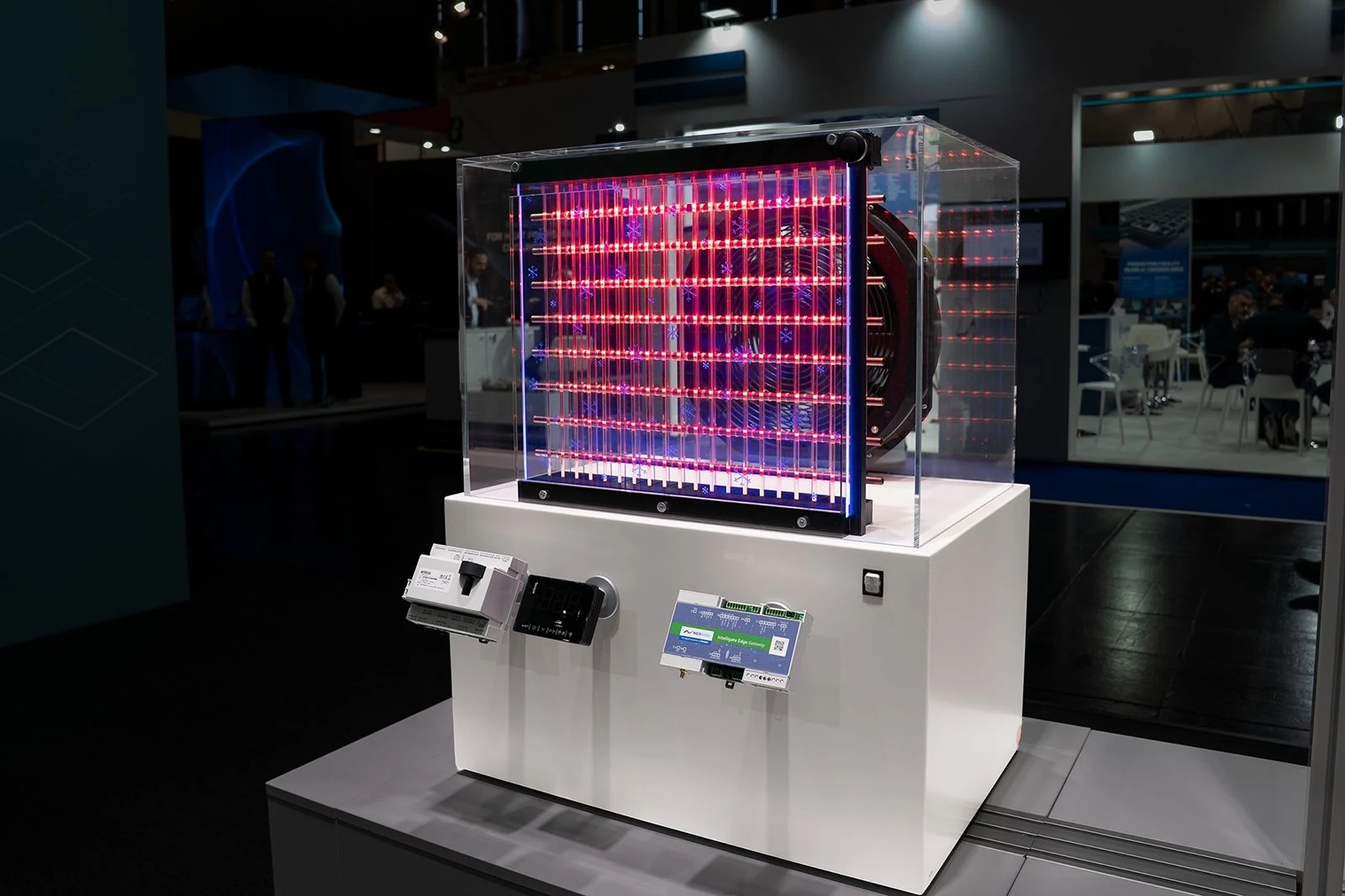
ebm-papst presented its Defrost on Demand technology at the Chillventa exhibition. The technology initiates evaporator defrost not on a fixed timer but based on the actual state of ice buildup, determined from EC fan data. During the event, the company was seeking potential pilot users and development partners.
How It Works
In conventional refrigeration systems, defrost cycles are triggered at fixed intervals even when ice buildup is minimal, leading to excess energy consumption and higher operating costs. Defrost on Demand uses operational data from the EC fan to assess the degree of evaporator icing: the fan simultaneously serves as an air delivery device and a condition sensor. Defrost is initiated only when a confirmed need is detected.
Test Results
The technology was tested under laboratory conditions and in a real freezer unit at −18 °C. Compared to the standard timer-based defrost (cycle every 7 hours), energy consumption dropped from 7.8 to 3.4 kWh per week. Depending on the actual ice buildup, only 3–6 defrost cycles per week were required instead of the continuous timer mode. This yields a potential saving of more than 49%. Further pilot projects will validate the results under various operating conditions.
Integration Paths
For practical implementation, ebm-papst is developing two approaches:
- EVCO controller — manages the complete refrigeration circuit and can integrate on-demand defrost functions directly into the control system.
- NEXAIRA digital gateway — is being considered as a platform for processing operational data, as well as providing additional monitoring and analytics functions.
Both approaches are still under development and will be tested within pilot projects.
Goals and Outlook
Defrost on Demand aims to reduce the number of unnecessary defrost cycles, thereby simultaneously lowering energy consumption, operating costs, and CO₂e emissions. Analysis of operational data additionally provides information about the unit's condition. The company continues to develop the results in collaboration with pilot users.
ORIGINAL SOURCE
kaeltejobs: Nachrichten ↗Visit the original source for additional details.