Industrial refrigeration
Pretecval MICRO-TUNEL Cuts In-Container Temperature Spread to Under 1 °C in Postharvest Pre-Cooling
Pretecval has introduced the MICRO-TUNEL, a forced-air pre-cooling tunnel that holds temperature variation inside a shipping container to less than 1 °C, compared with up to 8 °C in conventional systems. The company states the unit can reduce electrical consumption by 40–60 % and cools a crate of Lane-Late oranges from 20 °C to 6 °C in 90 minutes.
Postharvest handling relies on rapid temperature reduction to inhibit pathogen activity, slow degradation, and preserve the organoleptic and nutritional quality of produce. Because lowering and holding temperatures in cold-storage rooms and tunnels is energy-intensive, pre-cooling — adjusting the product's temperature before it enters the main refrigeration stage — has become a standard step in fruit and vegetable processing.
A forced-air approach to container uniformity
Pretecval, a refrigeration-sector company, developed the MICRO-TUNEL as a rapid forced-air pre-cooling tunnel. The system blows air across the fruit surface; the surface cools first, and heat then conducts through the fruit to bring the whole load to target temperature.
The principal technical problem the unit addresses is temperature equilibrium within a single container. According to Pretecval, conventional systems can show internal differences of up to 8 °C between zones of the same crate, whereas the MICRO-TUNEL keeps the spread below 1 °C at every point in the container.
Key performance figures cited by the manufacturer:
- Energy: up to 40–60 % reduction in electrical power consumption versus prior cooling stages.
- Speed: a batch of Lane-Late oranges, size 85–88, in wooden crates, is brought from a 20 °C inlet to 6 °C in 90 minutes.
- Uniformity: temperature difference of less than 1 °C across the entire container volume.
Combined pre-cooling and shipping in one footprint
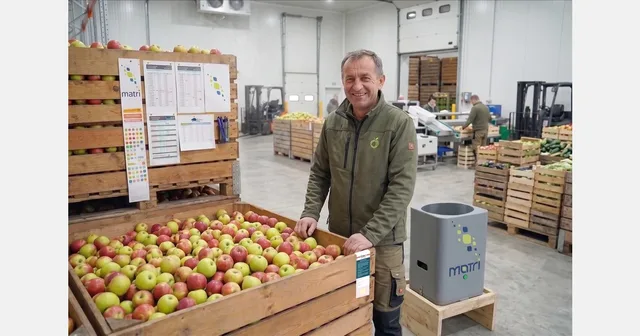
The MICRO-TUNEL merges the pre-cooling chamber and the shipping (dispatch) chamber into a single space. Pretecval notes that this layout shortens the distance between the two modules, minimises unnecessary handling of the produce, and frees warehouse floor area. The unit can be stacked to one or two levels without intermediate aisles, giving operators the option to increase throughput in a confined footprint.
All figures and savings are as stated by Pretecval.
ORIGINAL SOURCE
Postharvest: Cooling and CA ↗Visit the original source for additional details.