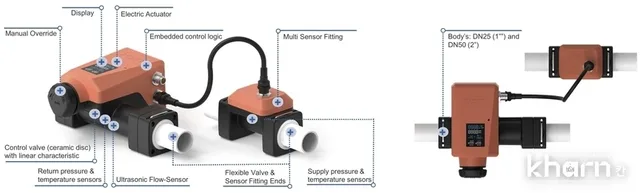
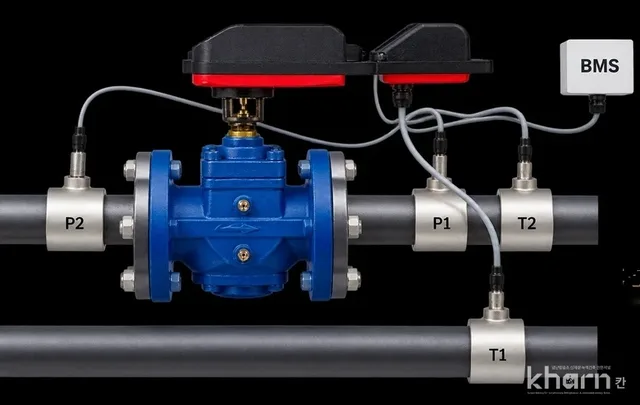
Components & controls
Pankow Town Hall Center Cuts Ventilation Energy Use by 46% with NEXAIRA Retrofit
According to ebm-papst, the installation of 61 EC fans and a NEXAIRA digital monitoring layer at Berlin's Pankow Town Hall Center reduced energy consumption by 46% and saved roughly 76,000 euros between 2021 and 2025. The operator is already planning further modernization steps.
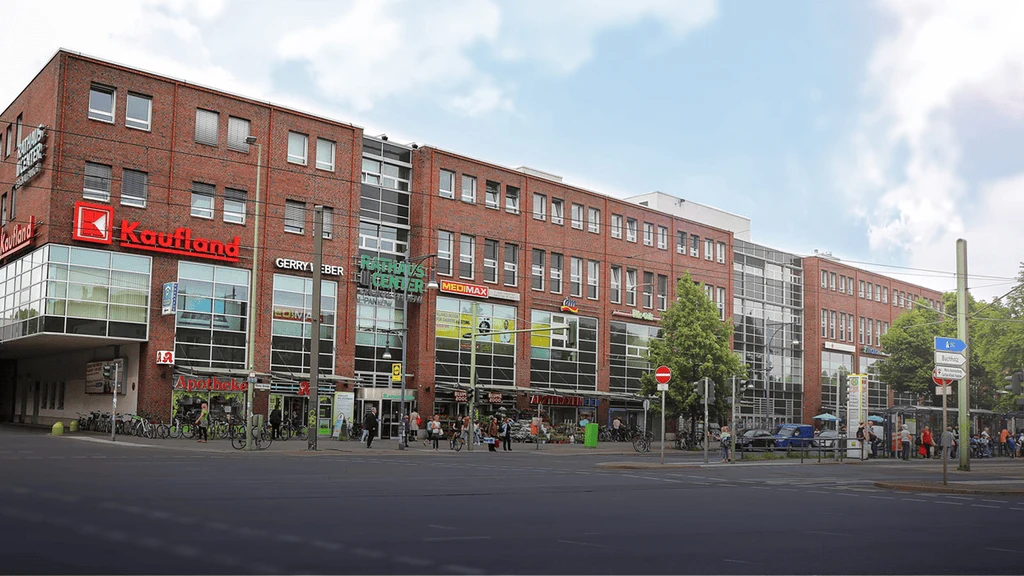
In a 10 November 2026 announcement, ebm-papst described the ventilation retrofit at Berlin’s Rathaus-Center Pankow. The company reports energy savings of 46% over the period from 2021 to 2025. The project combined a hardware upgrade of aging belt-driven blowers with a digital monitoring layer, demonstrating how a commercial building operator can optimize existing HVAC infrastructure without new construction.
Hardware upgrade: 61 EC fans in nine systems
In nine ventilation systems dating from the late 1990s, the previous belt-driven blowers were replaced with 61 RadiPac EC fans. The fans are arranged in redundant FanGrid structures to ensure a high level of supply reliability. The integrated EC technology provides demand-based, stepless speed control and maintains high efficiency stability in the partial-load range, which is the most common operating condition in real-world system operation.
Digital layer: NEXAIRA and NEXAIRA.Fit
On top of the hardware, the operator deployed NEXAIRA, ebm-papst's digital ecosystem for ventilation and refrigeration systems, which pairs highly efficient EC fans with data-driven analysis and control methods. The NEXAIRA.Fit module handles the digital expansion: operational data such as power consumption, speed, and operating hours are recorded via a gateway, supplemented with temperature, CO₂, and VOC values, and transmitted to the cloud in encrypted form. A central dashboard gives the operator transparency into plant operations.
Key NEXAIRA features include demand-based airflow control, condition monitoring, vibration analysis, and detection of contamination in filters and heat exchangers. Unlike conventional monitoring solutions that trigger an alarm only when a defined differential-pressure threshold is reached, the NEXAIRA approach lets operators predict how much time remains before that threshold is reached, enabling planned maintenance and reducing the risk of unplanned downtime. According to the manufacturer, ventilation applications can offer savings of up to 70% of fan-related energy costs.
Measurable results and next steps
Since implementation in 2021, the town center has achieved energy savings of 46% through 2025, corresponding to 130.41 metric tons of CO₂ avoided and approximately 76,000 euros in cost savings. The payback period is less than three years. Based on these results, the operator is already planning further modernization steps.
Rising energy costs, regulatory requirements, and climate targets continue to increase pressure on commercial building operators to modernize, and HVAC systems in particular offer significant potential for savings through targeted retrofits.
Source: ebm-papst.
These figures describe the reported project and manufacturer data; they should not be assumed for another installation.
ORIGINAL SOURCE
ebm-papst ↗Visit the original source for additional details.