Industrial refrigeration
Cooling as a Service: The Shift from Equipment Ownership to Outcome-Based Partnerships in Industrial Refrigeration
CaaS transfers operational risk to the supplier, who owns and operates the system while the customer pays a fixed rate per kW of cooling capacity. The model incentivises efficiency gains, natural refrigerant adoption, and ESG-aligned reporting. A 10 MW two-stage ammonia plant at Clover SA in South Africa achieved 40% cost savings under this arrangement.
Cooling as a Service (CaaS) is reshaping industrial refrigeration by replacing equipment ownership with outcome-based partnerships in which the supplier bears operational risk and the customer pays a fixed rate per kW of cooling capacity. The model, summarised here from a talk by Dawie Kriel (M. Eng. Pr. Eng.), General Manager of Energy Partners, Refrigeration, in Cape Town, South Africa, delivered at the Industrial Refrigeration Network Conference at the SCHAUFLER Academy in Rottenburg-Ergenzingen, Germany, is gaining traction across the refrigeration and heat pump sector.
How the CaaS model works
Under CaaS, the supplier owns and operates the cooling or heating system for its entire life cycle, assuming all associated risks and responsibilities. The customer forgoes a large initial capital outlay and instead pays a fixed rate per kW of cooling capacity. That rate covers maintenance and repairs; the supplier guarantees system availability and may be liable for penalty fees in the event of downtime.
Kriel emphasises that CaaS is primarily a risk-transfer product rather than a mere financing tool. It is driven by operational efficiency, which ensures the lowest life cycle cost and unlocks profitability for both parties. Customers are freed to focus on their core activities, while suppliers guarantee optimal system performance, uptime, and regulatory compliance. Because the supplier's income is tied to the system's performance, the model inherently incentivises efficiency improvements, reduced energy consumption, and the adoption of sustainable technologies. Improved temperature compliance, in turn, raises product quality and profitability for both the customer and the supplier.
Innovation, data, and environmental alignment
With energy efficiency as a key competitive advantage, CaaS suppliers are driven to lead in technological innovation and smart energy asset management. They must address diverse equipment needs, ensure compatibility across systems, and meet stringent regulatory requirements. Comprehensive data management, real-time performance monitoring, and centralised asset management become part of the service. Because the supplier commissions the system and continuously collects operating data, it can advise the customer on further efficiency gains or energy-waste reduction. At the same time, this customer-focused approach limits the supplier's own investment risk, since the supplier has much to lose if the customer encounters financial difficulties.
On the environmental front, CaaS prioritises efficiency improvements and the adoption of natural refrigerants, which not only comply with all legal regulations but are, according to Kriel, the most cost-effective option for the foreseeable future. The high-quality operational data generated under CaaS also aligns with ESG reporting requirements, enhancing the environmental credentials of customer companies and contributing to broader sustainable-development goals.
From South Africa to the wider world
Africa offers a particularly clear illustration of CaaS benefits. The continent faces unique challenges in electricity supply, cold-chain infrastructure, and food security. Under CaaS, even small companies and projects can invest in cold rooms, storage, and transport, and are less affected by power outages. Perishable goods stay fresh for a much longer time, reducing post-harvest losses, energy and land waste, and promoting economic development. Kriel notes that CaaS has the potential to transform the agricultural sector and improve livelihoods across the continent, while remaining equally relevant in developed countries where sustainability pressures are growing.
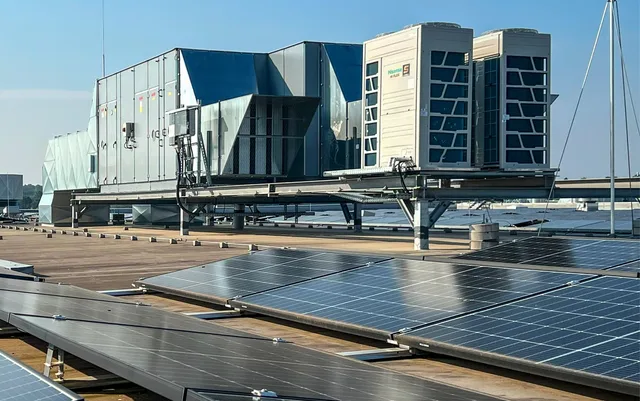
A concrete example is the deployment at Clover SA, one of South Africa's largest dairy processors. Energy Partners supplied a 10 MW two-stage ammonia cooling plant together with a 1.6 MW solar power system for the factory in Queensburgh. The installation achieved 40% cost savings, improved overall efficiency, and reduced carbon emissions through heat recovery and solar power. It is now the first fully servitised refrigeration, steam, and power plant, setting a precedent for other companies in the dairy industry. A similar CaaS ammonia refrigeration system has been installed at a poultry-producing plant of Sovereign Foods in South Africa.
Financing and industry collaboration
Financial institutions play a crucial role in facilitating CaaS adoption by providing innovative financing solutions. Investors are seeking viable energy-sector projects, and CaaS offers reliable returns in sustainable technology. As the industry evolves, the integration of heat-pump technologies and continued collaboration among stakeholders are expected to further enhance the value proposition of CaaS.
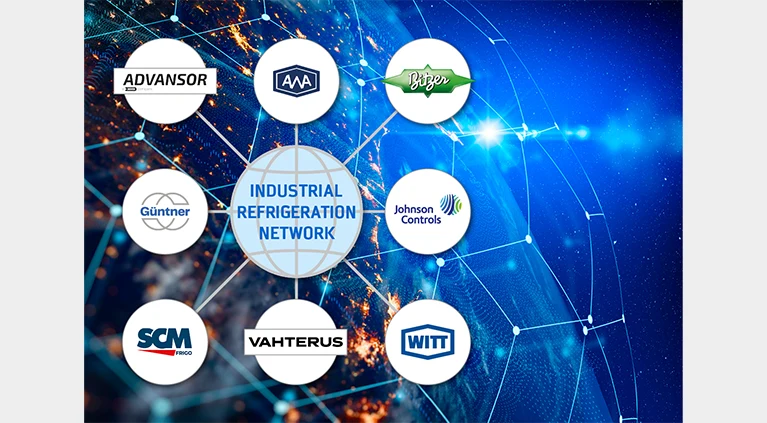
The newly founded Industrial Refrigeration Network (IRN) aims to promote the interests of natural refrigerants as an environmentally friendly solution for the industrial refrigeration industry in Europe. It is building a platform for thought leadership, partnering with stakeholders ranging from end users to contractors, installers, consultants, planners, OEMs, and academia. Its first industry-sponsored Network Conference, attended by approximately 90 participants, was held on 6–7 June 2024 in Rottenburg, Germany.
IRN contacts: Volker Stamer, Bernhard Blaeser
ORIGINAL SOURCE
BITZER ↗Visit the original source for additional details.