Cold chain
TCU approves 1,226-plug reefer terminal at Port of Fortaleza
Brazil's federal audit court TCU has approved the MUC04 container terminal at the Port of Fortaleza, providing for at least 1,226 reefer plugs, around US$80 million in investment, and a 25-year lease. The terminal will consolidate refrigerated container operations across a 148,000 sq m site and serve a hinterland extending into northeastern and Center-West Brazil.
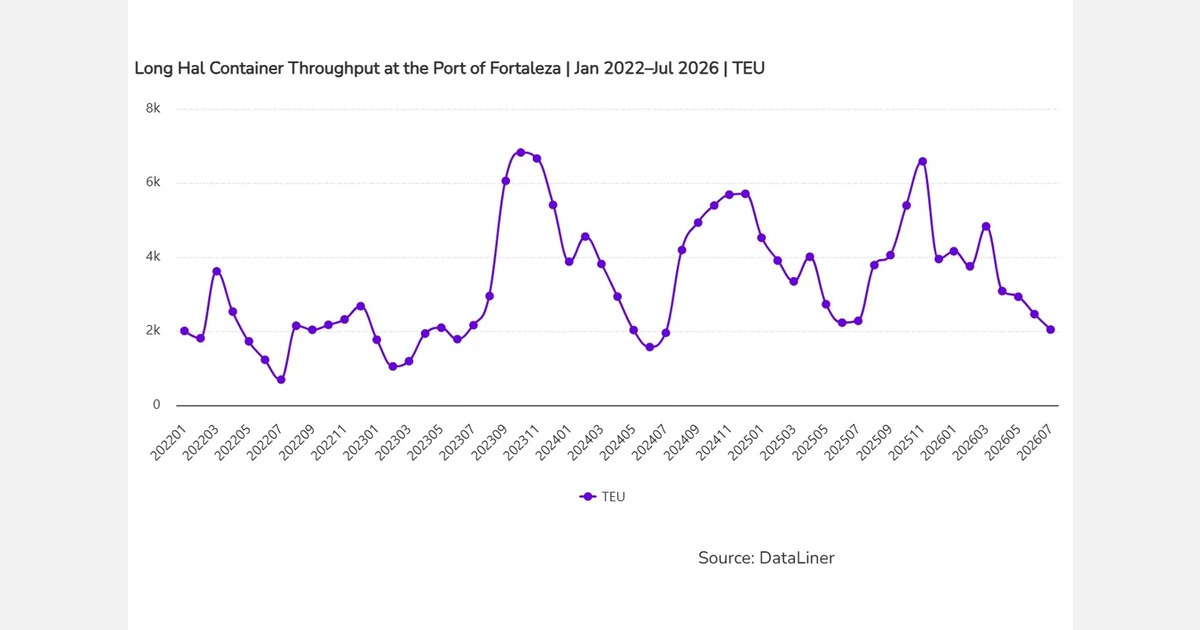
Brazil's federal audit court (TCU) has approved the concession model for the MUC04 container terminal at the Port of Fortaleza (Mucuripe), a project centred on refrigerated fruit export infrastructure. The approved model provides for around R$429 million (US$80 million) in investment under a 25-year lease.
Terminal specifications and consolidation
Under the initial model, MUC04 will feature at least 1,226 reefer plugs, three cranes, and six heavy-duty forklifts. The terminal will consolidate container operations currently spread across areas totalling approximately 88,000 square metres into a continuous site of around 148,000 square metres. Static capacity is set at 9,080 TEUs, with an annual operational capacity of 360,000 TEUs once fully developed.
Market context in Ceará
In 2025, refrigerated agricultural commodities accounted for around 95% of container movements at the Port of Fortaleza, with fruit exports among the principal cargoes. The Port of Pecém recorded a 14% increase in fruit handling that year, while volumes of fresh melons, watermelons, and papayas rose 27%. By May 2026, Ceará's melon exports had reached US$90.94 million, already exceeding the total value recorded for all of 2025. Ceará was Brazil's second-largest melon exporter, behind Rio Grande do Norte.
Hinterland and phytosanitary conditions
The potential hinterland for MUC04 extends beyond Ceará to other northeastern states and parts of Brazil's Center-West, enabling the terminal to handle export cargo from a wider production area. In 2026, Ceará also expanded its pest-free area for Anastrepha grandis, affecting phytosanitary conditions for melon and watermelon exports.
© DataLiner
Source: DataLiner
ORIGINAL SOURCE
FreshPlaza: Cooling ↗Visit the original source for additional details.