Components & controls
Specifying Heat Exchangers: Why Functional Requirements Must Come First
Eugene le Roux (FSAIRAC) and Eamonn Ryan argue that a heat exchanger specification should be built around functional parameters—fluid properties, temperatures, thermal duty, and pressure conditions—rather than physical characteristics alone. Published in RACA Journal, this Part 1 of a two-part series covers the functional side; Part 2 will address the physical interface, mechanical integrity, safety, maintenance, and instrumentation.
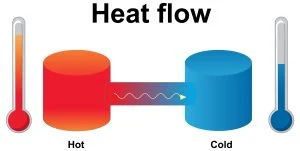
When specifying equipment for an HVAC&R or industrial project, it is easy to concentrate on the physical characteristics of a component while overlooking the functional requirements that determine whether it will perform as intended. Heat exchangers provide a good example: their correct specification is critical to overall system performance, yet the interface between the heat exchanger and the wider installation can receive insufficient attention during project planning, according to Eugene le Roux (FSAIRAC) and Eamonn Ryan in a two-part series for RACA Journal.
Core functional parameters
A useful starting point is to define precisely what the heat exchanger is expected to do, under which operating conditions, and within what performance limits. The specification should begin by identifying the two fluids involved. Their properties, intended flow rates, and allowable flow resistance need to be established, because these are fundamental design inputs that influence both the heat-transfer capability and the pressure losses through the equipment.
The temperatures of the fluids are equally important. The specification should state the inlet temperatures of both fluids, together with the required outlet temperature of the fluid being cooled or heated. Where necessary, the expected operating range should also be included, rather than relying on a single set of design conditions.
From these parameters, the required heat-transfer duty can be established in kilowatts. However, stating a duty alone is not sufficient. The capacity must be linked to the specified flow rates and inlet temperatures; otherwise the performance requirement is incomplete and may be interpreted differently by the designer, supplier, and installing contractor.
Variable operating conditions and pressure
Another consideration is whether operating conditions will remain constant. Some installations experience significant temperature variations over time, while others may be subject to fluctuating loads or intermittent operation. These variations should be identified at the specification stage because they can influence equipment selection and control requirements.
Pressure conditions also deserve careful attention. The specification should identify the operating pressures of both fluids, including possible pressure fluctuations or pulsations. Where the two circuits experience pressure variations, it may be important to establish whether these occur simultaneously. The maximum allowable pressure combinations should also be considered, rather than looking at each circuit in isolation.
The governing principle
Ultimately, the objective is to describe the heat exchanger in functional terms: what it must achieve, under what conditions, and with what acceptable limitations. The fundamental principle governing heat exchanger performance is the overall heat-transfer coefficient, which is influenced by the properties of the fluids, flow conditions, heat-transfer surfaces, and resistance to heat transfer on both sides of the exchanger. A specification that clearly defines the required duty and operating conditions therefore provides the foundation for selecting and designing an appropriate heat exchanger.
In Part 2, the authors consider the physical interface, mechanical integrity, safety, maintenance, and instrumentation requirements that should also form part of a comprehensive specification.
Image credit: Brgfx | Magnific.com
Source: RACA Journal.
ORIGINAL SOURCE
RACA Journal ↗Visit the original source for additional details.