Refrigerants & environment
UBA Study Finds TEWI Gaps Between Natural and Halogenated Refrigerants Often Small, but Persistent Degradation Products Favour Naturals
A UBA comparison of 177 chillers and 46 condensing units shows that total equivalent warming impact differences between natural and halogenated refrigerants are frequently modest, while electricity use and persistent degradation products such as TFA from certain fluorinated compounds shift the environmental balance toward propane, ammonia and CO2.
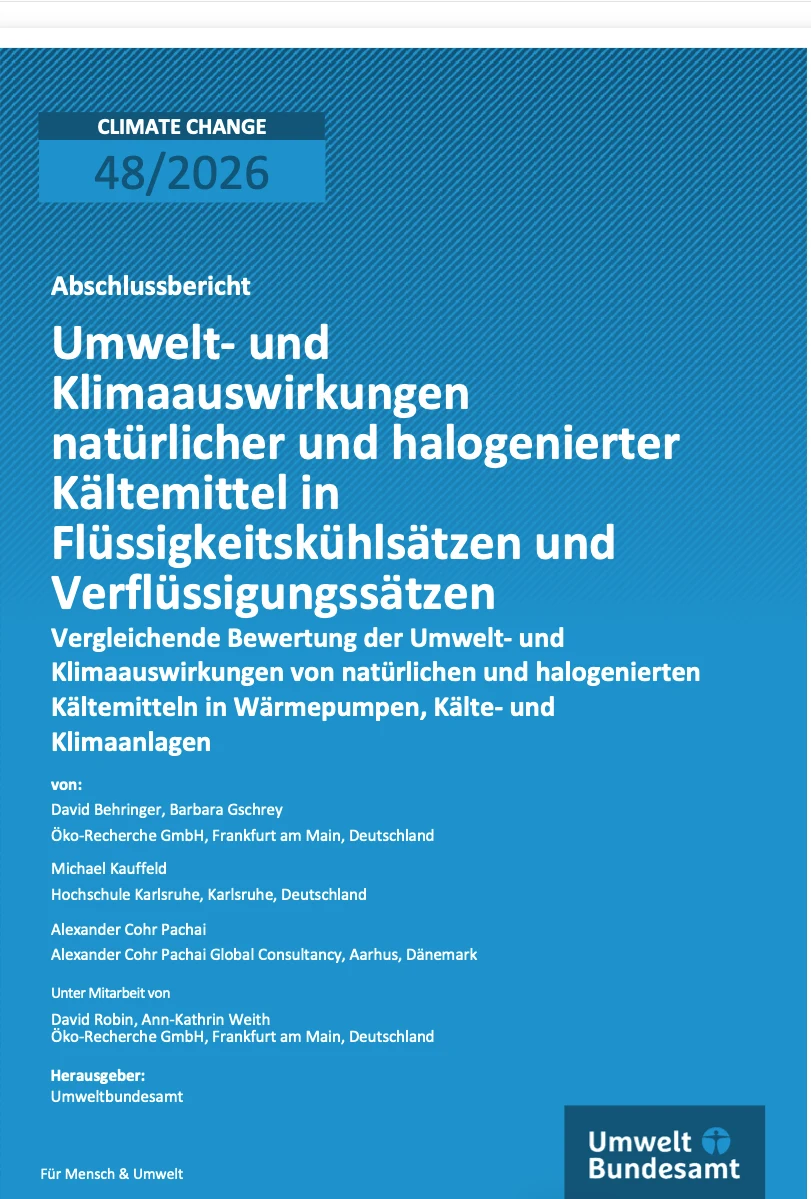
The German Federal Environment Agency (UBA) has published a comparative analysis showing that the total equivalent warming impact (TEWI) of chillers and condensing units using natural refrigerants is often close to that of units using halogenated refrigerants with GWP below 750, but that persistent degradation products tip the overall environmental balance in favour of the natural alternatives.
Scope of the study
Released on 5 November 2026, the analysis draws on technical data for 177 chillers and 46 condensing units. Refrigerants examined include propane, ammonia and CO2 on the natural side, and halogenated refrigerants or blends with a GWP below 750 on the synthetic side.
Key findings
- TEWI differences between the two groups are often small.
- Operating electricity consumption is a significant factor in total climate impact.
- When persistent degradation products are factored in, natural refrigerants are favoured. UBA notes that certain fluorinated refrigerants can form trifluoroacetic acid (TFA); it explicitly states this does not mean every fluorinated refrigerant follows the same degradation pathway.
Limitations
UBA cautions that the findings apply to the specific equipment and assumptions studied, not to every refrigeration application. A TEWI comparison alone does not capture all environmental effects and does not replace assessment of energy efficiency, safety, or technical suitability.
ORIGINAL SOURCE
ZeroSottoZero ↗Visit the original source for additional details.