Industrial refrigeration
NeoCharge in an Ammonia System: Circulation Tank Level After Shutdown Dropped from 75% to 38%
Danfoss NeoCharge, installed at a large logistics facility in Romania, reduced the refrigerant level in the circulation tank of an ammonia system after shutdown from 75% to 38% and improved evaporator outlet air temperature from −27 to −28 °C to approximately −30 °C. The client is considering extending the solution to the remaining 26 evaporators.
Danfoss Climate Solutions (Zhang Wanyu, 12.11.2026)
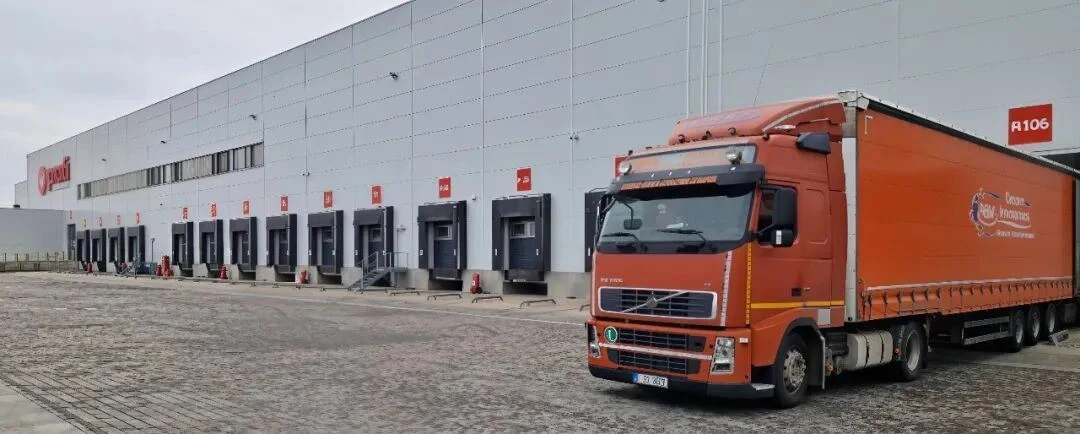
At a large logistics facility in Romania, a Danfoss NeoCharge unit installed in an ammonia refrigeration system with pump-circulation refrigerant feed reduced the circulation tank level after shutdown from 75% to 38% and improved heat-exchange efficiency in the evaporators. The client is evaluating the possibility of extending the solution to the remaining 26 evaporators.
Project parameters
The facility is a large cold-chain logistics centre in Romania. System: ammonia, pump-circulation refrigerant feed. Evaporation temperature — approximately −32 °C. Six evaporators, total cooling capacity — around 276 kW. Two cold-storage warehouses are served.
Problem before the upgrade
During normal operation the circulation tank level was about 31%. After shutdown, a significant portion of the liquid ammonia remaining in the evaporators returned to the tank, raising the level to 75%. The high circulation ratio indicated that a notable share of the refrigerant was not participating in heat exchange but was simply circulating through the circuit without useful effect. Evaporator outlet air temperature held in the range of −27 to −28 °C.
Results after NeoCharge installation
After installation and commissioning, the tank level after shutdown dropped from 75% to 38%, essentially back to the operating value (around 31%). This means that more liquid ammonia is being used effectively in the evaporation process rather than remaining in the evaporators as a carrying film. The system delivers the same cooling load with a smaller refrigerant charge.
Evaporator outlet air temperature improved from −27 to −28 °C to approximately −30 °C, indicating more uniform refrigerant distribution and higher heat-exchange efficiency. The lower outlet temperature shortens the time to reach the setpoint in the chambers and, consequently, compressor running time.
Expansion plans
The client rated the results highly and has begun evaluating the installation of NeoCharge on the remaining 26 evaporators; the solution has been included in plans for future projects. According to Danfoss representatives, the project demonstrates the path from a pilot installation on six evaporators to coverage of more than 30 units and broader industry application.
Context
As requirements for safety, energy efficiency, and sustainability grow in industrial refrigeration, reducing refrigerant charge, improving evaporator utilisation, and optimising overall efficiency are becoming priority tasks. The Romanian project confirms that precise refrigerant feed can reduce residual liquid in evaporators and minimise backflow at shutdown, while simultaneously improving heat exchange with a smaller charge.
Source: Danfoss Climate Solutions, 12.11.2026. Material provided by the manufacturer; publication — 制冷快报.
ORIGINAL SOURCE
制冷快报 ↗Visit the original source for additional details.