Standards & safety
UNEP-U4E Issues Procurement Guidelines with LCC Tool for Cooling and Heat Pump Systems
The UNEP-U4E initiative has published two sustainable procurement guidelines covering air conditioners up to 70 kW and heat-pump-based heating and hot-water systems, complete with a Life Cycle Cost comparison tool. The documents set technical and verification criteria aligned with the Kigali Amendment and the Global Cooling Pledge 2030 procurement targets.
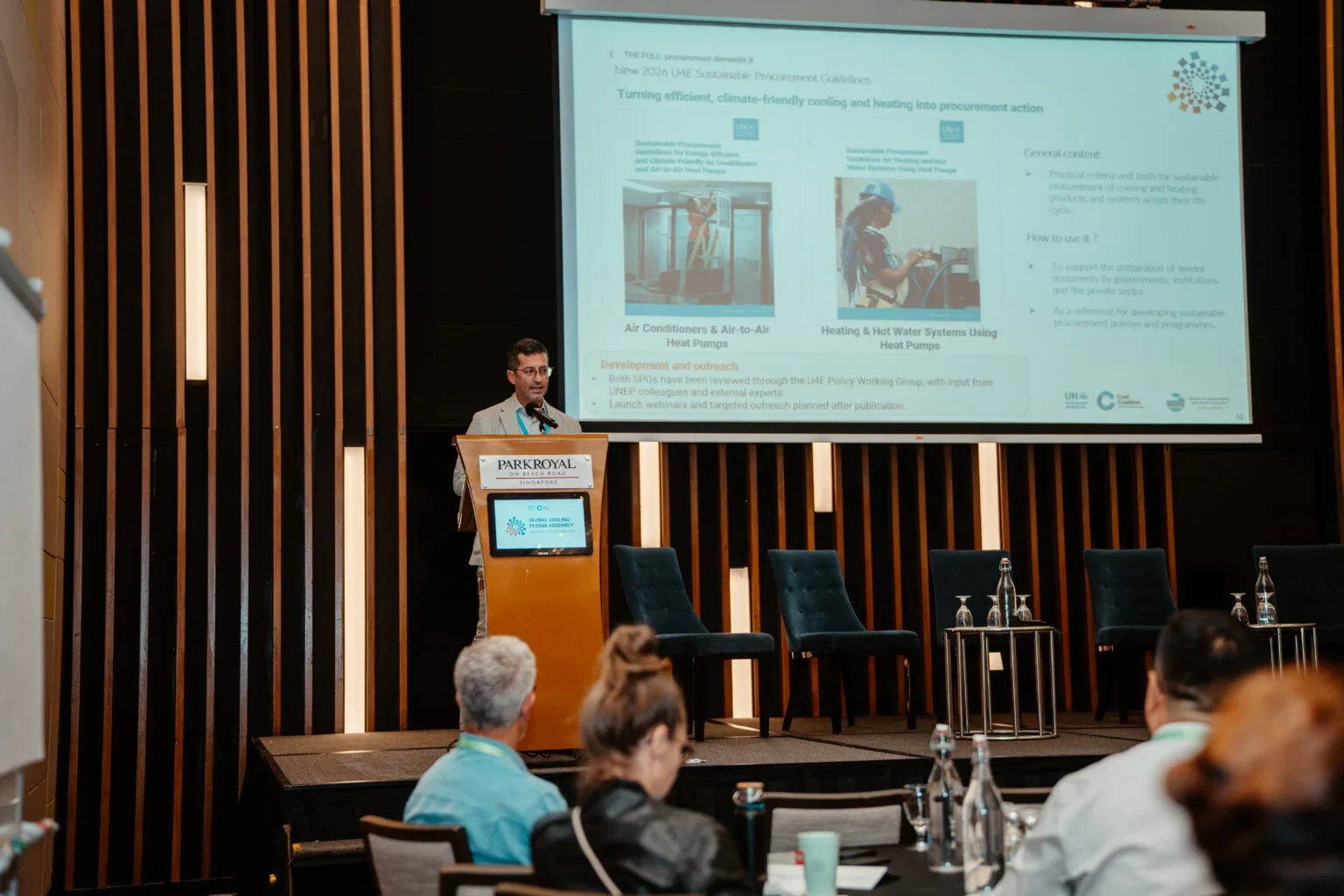
The United Nations Environment Programme's United for Efficiency (UNEP-U4E) initiative has released two Sustainable Procurement Guidelines that define technical criteria, verification requirements, and a Life Cycle Cost comparison tool for purchasing energy-efficient cooling and heating equipment. The publications were announced by UNEP-U4E Programme Manager Patrick Blake at the Global Cooling Pledge Assembly in Singapore.
Scope and technical criteria
The updated guidelines for air conditioners and reversible air-to-air heat pumps cover equipment with a rated cooling output of up to 70 kW (approximately 239,000 BTU/h). They establish procurement criteria spanning equipment sizing, energy performance, humidity control, lower-GWP refrigerants, safety, sound levels, installation, maintenance, and end-of-life management. Particular attention is given to humidity management in hot and humid climates, where oversized or poorly controlled systems can increase energy consumption.
The second set of guidelines addresses heating and hot-water systems based on water-based installations supplied primarily by electrically driven heat pumps using air, ground, water, or waste-heat sources. The recommendations take a system-level approach, covering operating temperatures, heat distribution, controls, buffer and hot-water storage, refrigerant requirements, and maintenance, and emphasize evaluating the performance of complete systems rather than individual components.
LCC tool and intended audience
Both publications include technical criteria and verification requirements supported by a U4E Excel tool for Life Cycle Cost (LCC) and Emissions assessment. The tool allows purchasers to compare compliant offers based on initial costs, energy consumption, operating expenses, and greenhouse-gas emissions. The guidelines are intended for public authorities, private companies, utilities, and other large buyers.
Policy context
The publications support implementation of the Kigali Amendment and the Global Cooling Pledge, under which participating countries committed to establishing or updating procurement policies for low-GWP, high-efficiency cooling technologies by 2030. The guidelines will also be highlighted during side events at the 38th Meeting of the Parties to the Montreal Protocol in Kigali, scheduled for 2–6 November 2026.
Documents:
- Sustainable Procurement Guidelines for Energy-Efficient and Climate-Friendly Air Conditioners and Air-to-Air Heat Pumps
- Sustainable Procurement Guidelines for Heating and Hot Water Systems Using Heat Pumps
Source: Refindustry.
ORIGINAL SOURCE
Refindustry ↗Visit the original source for additional details.