Science & technology
Pulsating refrigerant flow at 9 Hz lifts evaporator heat transfer and COP in split-AC lab test
A Scientific Reports study tested alternating solenoid-valve pulsation in a two-section split-AC evaporator using ECO-22. At 9 Hz, heat transfer rose 13.33% and COP 13.63% over continuous flow, with a 23.3% shorter time to target; results are rig-specific and not a retrofit recommendation.
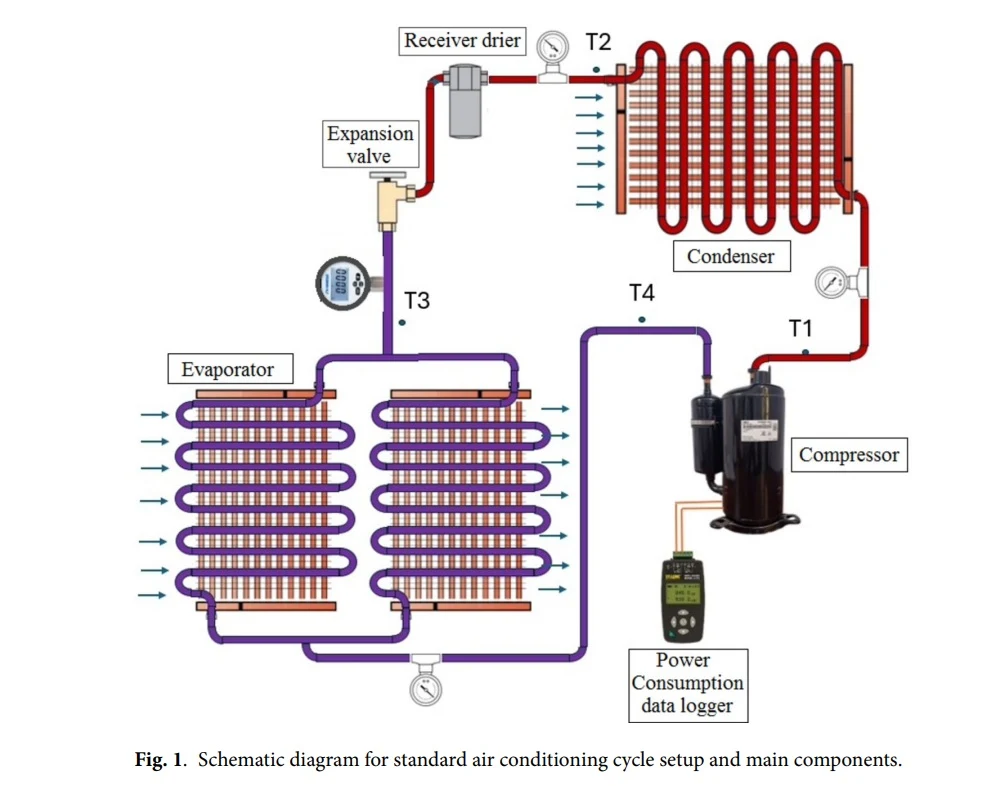
An experimental study published in Scientific Reports demonstrates that pulsating refrigerant flow through a split air-conditioner evaporator can improve heat transfer and coefficient of performance under controlled laboratory conditions.
Test rig and parameters
The rig used ECO-22 as the working fluid — a designation that must not be conflated with R22 — and featured two parallel evaporator sections switched by alternating solenoid valves. Tests were run at pulsation frequencies of 6, 9, and 12 Hz and inlet air temperatures of 24, 26, and 28 °C.
Results at the optimal frequency
The most favourable condition was 9 Hz. Relative to continuous (non-pulsating) flow:
- heat transfer increased by 13.33 percent;
- COP increased by 13.63 percent;
- time to reach the tested target temperature fell by 23.3 percent;
- compressor power consumption showed a negligible change.
Limitations and open questions
The authors stress that these are laboratory results for the specific rig studied; they do not constitute universal seasonal-savings figures or a service-retrofit recommendation. Valve noise and long-term application validation remain open issues. The paper proposes further work under varying loads, different humidity levels, and with other refrigerants.
ORIGINAL SOURCE
Refindustry ↗Visit the original source for additional details.