Industrial refrigeration
Binshan Environment: CO₂ Systems and Heat Recovery as the Foundation of Climate Control for China's Ice and Snow Economy
China's Binshan Environment deploys CO₂ and ammonia systems with condensing heat recovery for Olympic and commercial ice-and-snow facilities. For the 2025–2026 season, China's ice-and-snow tourism is projected to attract 360 million visitors and generate 450 billion yuan; by 2027, the sector's total volume is expected to reach 1.2 trillion yuan.
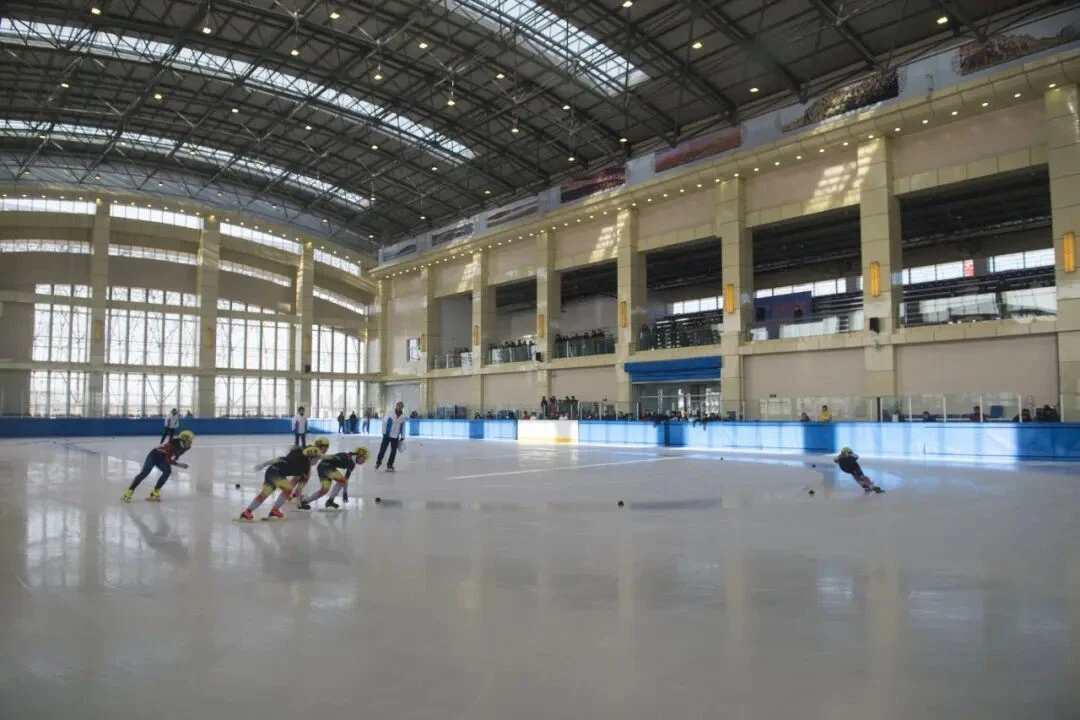
Binshan Environment has built a climate-control product line based on natural refrigerants — CO₂ and ammonia — covering applications from Olympic ice arenas to commercial ski resorts and the supporting infrastructure of the ice-and-snow tourism sector.
A Market That Demands Precise Cold
According to estimates by the China Tourism Research Institute, cited in the Report on the Development of Ice and Snow Tourism in China (2026), the number of ice-and-snow tourism visitors in the country will reach 360 million in the 2025–2026 winter season, with revenue of 450 billion yuan. The State Council of the PRC set a target in its document Several Remarks on Stimulating the Ice and Snow Economy through High-Quality Development of Ice and Snow Sports: by 2027, the total volume of the ice-and-snow economy should reach 1.2 trillion yuan.
Behind each of these figures lies an engineering challenge: in a competition ice rink, a 0.5 °C deviation in ice temperature changes a skater's push-off efficiency and directly affects the safety and fairness of the competition. A commercial indoor ski resort must simultaneously maintain snow-cover temperature, dehumidify the air, and recover condensing heat — a failure in any of the three circuits leads to window condensation, ice buildup on panels, and uncontrolled energy consumption. Hotels, food production, and equipment storage along the ice-and-snow tourism route also depend on stable climate control.
Olympic Arenas: Precision as a Requirement
Binshan Environment's ability to deliver climate control to Olympic standards was tested at the Beijing Winter Olympics venues. The company served the National Speed Skating Oval, the National Sliding Centre, the National Indoor Stadium, the Capital Indoor Gymnasium, and the Wukesong Ice Centre.
- National Speed Skating Oval (Ice Ribbon). Four large CO₂ barrel pump units powered the world's first Olympic speed-skating rink with direct CO₂ ice cooling. The temperature variation across the ice surface is maintained within 0.5 °C, and system efficiency exceeds that of conventional solutions by more than 20 %.
- National Sliding Centre (Snow Dragon). A condensing heat pump using a water heat source converts rejected heat from the refrigeration circuit into high-potential thermal energy for building heating. According to the company, energy efficiency is 5–6 times higher than that of conventional electric heating; the system provides combined heating and cooling.
- Capital Indoor Gymnasium. The rink zone must maintain 16 °C and 35 % relative humidity. Binshan Environment supplied its own single-head, high-capacity magnetic-levitation centrifugal chiller, operating in conjunction with a rotary dehumidifier and a direct-expansion air supply system.
Commercial Ski Resorts: Balancing Energy Costs
Indoor ski resorts in southern China operate year-round, and the key challenge is to simultaneously maintain snow cover and dehumidify the air, while energy costs remain the largest item in operating expenses.
Binshan Environment's solution is built on high-efficiency screw refrigeration compressor units with a heat-recovery system: condensing heat, normally rejected to the atmosphere, is directed to snow melting at the entrance, locker-room heating, and hot-water preparation.
The Duck Castle ski resort in Wenzhou has been in operation since 2014, with annual traffic approaching 100,000 visitors. The project was one of the first in China to use CO₂ as a heat carrier in an indoor ski resort. Semi-hermetic screw compressor units with a recuperator were installed; rejected compressor exhaust heat is used to preheat defrost water. According to the company, the CO₂ heat-carrier system ensures safety and environmental friendliness, high-efficiency heat exchangers provide rapid temperature reduction, and full heat recovery improves energy efficiency.
Technology Platform and Expansion into Adjacent Segments
The core of Binshan Environment's climate control for ice-and-snow applications covers the range from −20 °C to −5 °C, using ammonia and CO₂ as natural refrigerants (ODP = 0, GWP = 1), which eliminates the dual environmental impact of conventional fluorocarbons on the ozone layer and climate. The company's overall technology range spans from −271 °C to +230 °C.
Climate control is not limited to the rinks and ski slopes themselves. The development of ice-and-snow tourism in northeastern China drives demand for cold-chain logistics for food (pre-cooling, delivery), climate control in hotels and shopping centres under extreme cold conditions, and systems for drying and freezing vegetables and fruits. Binshan Environment covers these needs with its product lines for industrial refrigeration and comfort air conditioning.
Accumulated Engineering Resources
Over 70 years of work in compressor and heat-exchange technologies, the company has registered 626 national-level invention patents, led or participated in the development of 72 national and industry standards, received two state awards (the National Science and Technology Progress Award and the National Technical Invention Award), and been recognized three times by the UN for its contribution to ozone-layer protection. According to the company, its green low-carbon products and solutions reduce CO₂ emissions by more than 38 million tonnes annually.
Source: corporate publication by Binshan Environment, published on the Refrigeration Express (制冷快报) platform, 11.11.2026. Material provided by the company; the editorial team bears no responsibility for the content.
ORIGINAL SOURCE
制冷快报 ↗Visit the original source for additional details.