Chillers & heat pumps
Self-Diagnosis of an Air-Sourced Heat Pump: What You Can Check Yourself and What Requires a Technician
Oujing Eurgeen claims to be the first in the industry to embed a QR code on its air-source heat pump control panel linking to an official troubleshooting guide. The article outlines which issues a user can diagnose without disassembly or refrigerant handling, when professional service is required, and sets out three basic safety rules.
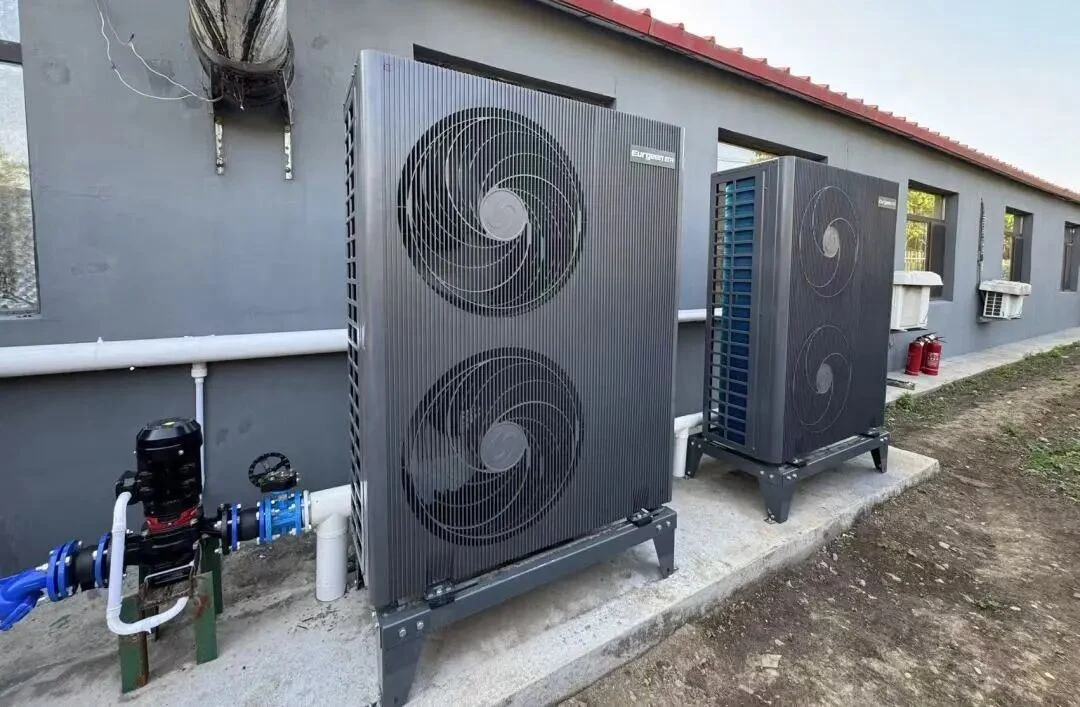
Oujing Eurgeen (欧井) has introduced a QR code labeled "Troubleshooting Guide" on the control panel of its air-source heat pumps — according to the manufacturer, this is the first such tool in the industry. A user scans the code from the controller, selects a symptom or error code, and receives step-by-step instructions for self-diagnosis.
What You Can Check Without a Technician
Before calling a service technician, it is worth ruling out a number of common causes that do not require disassembly, electrical work, or refrigerant handling:
- No response. Check the reliability of the plug connection, the state of the circuit breaker, and whether the timer, off, or energy-saving mode has been accidentally activated on the panel. On first startup, the unit enters a preheating mode for approximately 20 minutes — this is normal behaviour, not a fault.
- Reduced heating efficiency. Inspect the fins of the outdoor unit for blockage by dust, leaves, or fibres; make sure the set temperature has not been lowered by another user; check whether the defrost cycle is operating in winter; and whether the room insulation or water consumption volume has changed. A surface cleaning of the outdoor unit is permissible after disconnecting power; disassembling the housing and working with internal components is not recommended.
- Excessive noise. Ensure the unit is installed level, that mounting bolts are tightened, that there are no nearby objects (metal sheets, pots) capable of resonating, and that piping and brackets have not loosened.
- Error codes on the display. A code does not mean a "verdict" — it is a signal pointing to a specific zone. Through the QR code on the controller, you can determine whether the fault falls into a category permitted for self-resolution. If the same code accumulates three times, the unit enters a protection mode and shuts down; after the cause is resolved, power must be cut and restored to reset.
- Low water pressure / unstable water temperature. First check the mesh filter at the inlet, the stability of mains water pressure, whether too many water outlets are open simultaneously, and whether the wrong mode has been selected. In most cases the cause lies in the water supply line, not in the unit itself.
When a Specialist Must Be Called
The following situations go beyond user-level maintenance:
- Abnormal compressor noise, frequent start-stop cycles.
- Signs of refrigerant leak: unusual icing, complete absence of heating, sharp drop in output.
- Burning smell, smoke, repeated tripping of protection.
- Leakage from the tank or anomalies in the internal reservoir (the pressurising element is not a "replace the gasket" job).
- The same error code recurring after a reset.
- Any work involving refrigerant, high-voltage circuits, or internal electrical components.
Three Safety Rules for Self-Diagnosis
- Disconnect power first, then inspect — whether it is cleaning the outdoor unit, checking the piping, or moving the unit.
- Only surface-level actions are permissible: visual inspection, listening, checking settings, cleaning accessible surfaces. Disassembling the compressor, working with refrigerant, and opening the electrical compartment are outside the user's competence.
- During the warranty period, the official service centre is preferred to avoid losing warranty rights due to self-intervention.
The material is based on a corporate publication by Oujing Eurgeen (author — Zhang Wanyu, 11.11.2026). Source: 制冷快报 (Refrigeration Express).
ORIGINAL SOURCE
制冷快报 ↗Visit the original source for additional details.