Standards & safety
German associations clarify tiered input data for residential ventilation heat recovery under DIN V/DIN TS 18599
Eight German associations, presented through DEN on 28 October 2026, published guidance on how residential ventilation heat recovery should be accounted for in building energy calculations under DIN V/DIN TS 18599. A model-building example shows calculated primary-energy demand ranging from 43.2 to 33.0 kWh/(m²·year) depending on whether default, improved, or substantiated equipment data are used. The guidance stresses that designers must document valid input data and verify the applicable calculation framework.
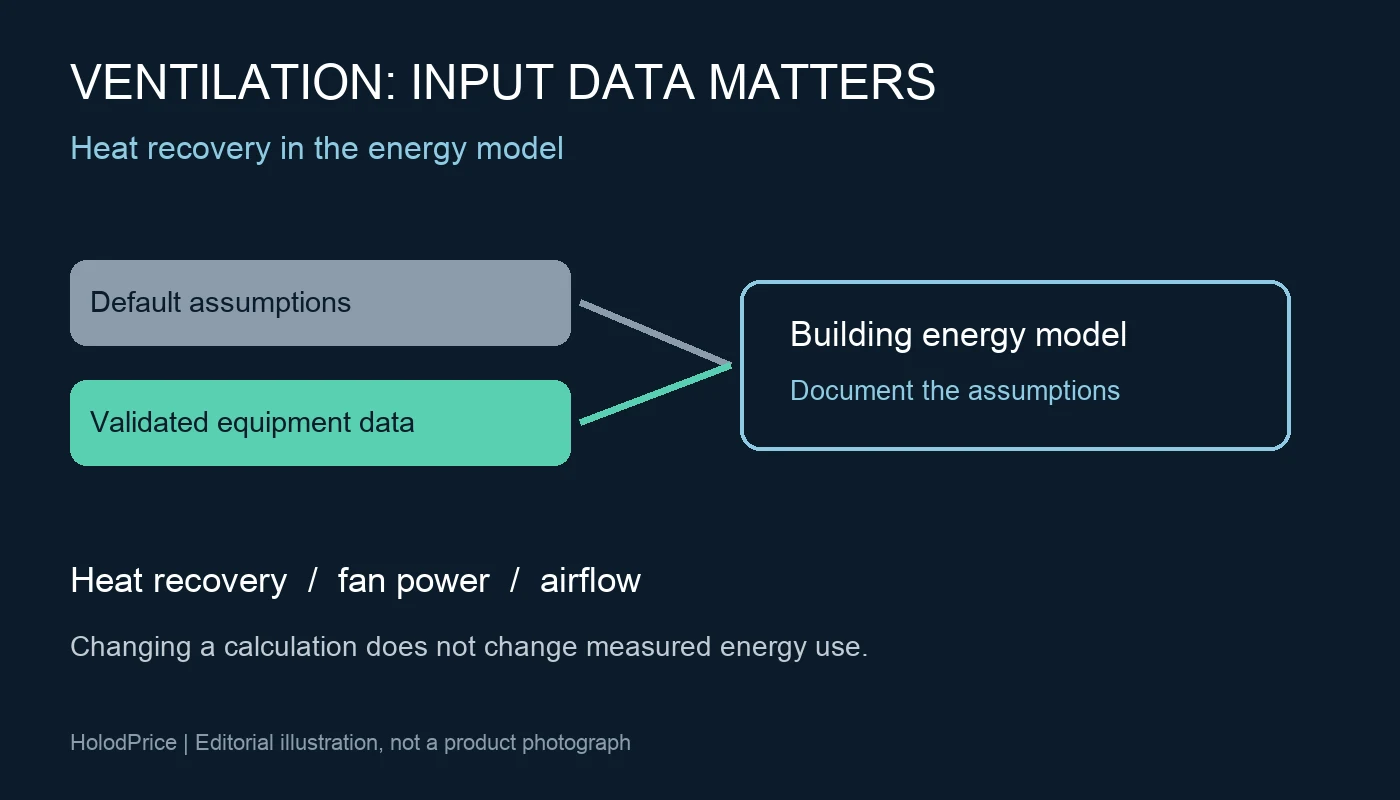
Eight German associations have published guidance, presented by DEN on 28 October 2026, on the accounting of residential ventilation heat recovery in building energy calculations under DIN V/DIN TS 18599. The document distinguishes three tiers of input data — default assumptions, improved values, and substantiated manufacturer data — and explains how each tier affects the calculated primary-energy demand of a residential building.
Three tiers, one model building
The guidance illustrates the effect of input-data quality with a single model building. Without any heat-recovery credit, the calculated primary-energy demand is 43.2 kWh/(m²·year). Applying default assumptions brings the figure to 42.4 kWh/(m²·year); using improved values lowers it to 36.8 kWh/(m²·year); and entering substantiated equipment data from the manufacturer yields 33.0 kWh/(m²·year). These figures are alternative calculations for one reference building, not measured savings that would result from changing a software setting on an existing project.
What designers must document
The associations emphasise that designers should document the valid input data they rely on and verify which calculation framework applies to a given project. The example figures do not guarantee a particular subsidy class for any other building; they serve only to show how the choice of input tier shifts the calculated result within the same standard.
The factual basis for this report was independently assembled from DEN and is not a translation of cci material. The cover image is an original editorial illustration.
ORIGINAL SOURCE
cci Dialog ↗Visit the original source for additional details.