Components & controls
Power Quality as a Strategic Factor for Data Centers: ABB ACH580 with Ultra-Low-Harmonic Technology
ABB positions the ACH580 variable frequency drive with Ultra-Low-Harmonic technology as a tool for reducing harmonic distortion in data center power networks. Based on practical experience, deploying intelligent variable-speed drives can reduce cooling system energy consumption by 25%.
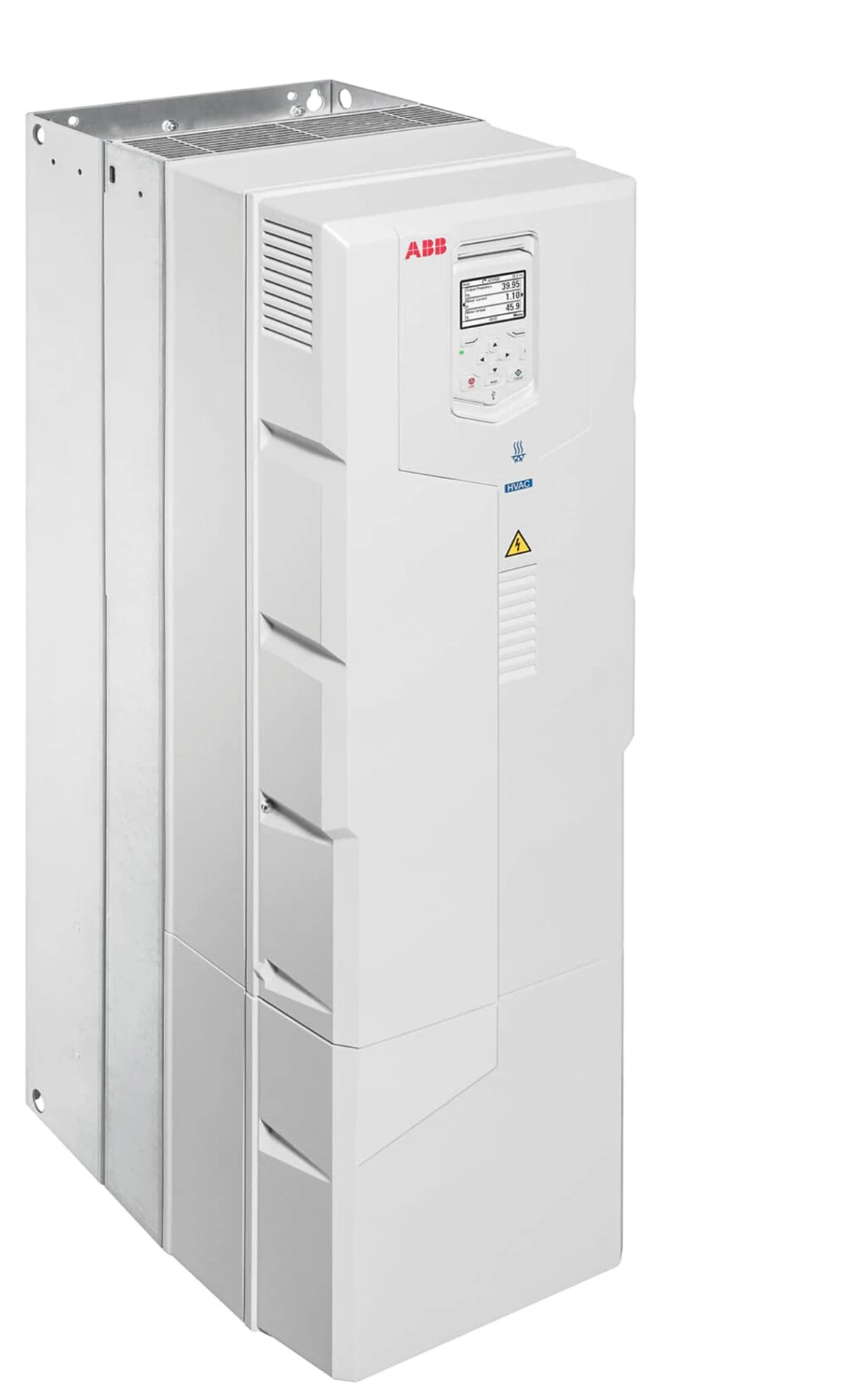
Power quality, not just cooling capacity, is becoming a key factor in data center reliability. ABB presents the ACH580 variable frequency drive with Ultra-Low-Harmonic technology, designed to minimize harmonic distortion in data center power networks and ensure a stable climate regime.
Harmonics: a hidden threat to data center infrastructure
As cloud services, artificial intelligence, and resource-intensive applications grow, the energy consumption of data center infrastructure continues to rise. At the same time, power quality—specifically the level of harmonics—remains an underestimated factor affecting both operational safety and the economics of the facility.
Harmonics occur when consumers draw current in a non-sinusoidal waveform. The main sources are non-linear loads: switched-mode power supplies, uninterruptible power supplies, power electronics, and electric drives. In modern data centers, the concentration of such consumers is high, leading to the accumulation of distortion in the network with the following consequences:
- additional energy losses dissipated as heat;
- increased thermal load on cables, transformers, and switching devices;
- interference for sensitive electronics;
- risk of unplanned outages due to transformer overheating, capacitor degradation, and protection system tripping.
Operators are forced to increase cable cross-sections and transformer capacity, even though the true cause is not a load increase but poor power quality. This leads to overspending on infrastructure investment.
ACH580 and Ultra-Low-Harmonic: what the solution offers
Cooling systems are one of the largest energy consumers in data centers. Fans, pumps, and compressors constantly respond to changing loads, and variable frequency drives are used to regulate motor speed. However, conventional drives without special harmonic-limiting technology can themselves amplify distortion in the network.
The ACH580 drive with Ultra-Low-Harmonic technology combines precise speed control with significantly improved input current quality. Thanks to its special design, it minimizes harmonic injection into the network, which allows:
- not increasing the capacity of transformers, generators, and cable runs beyond actual needs;
- reducing capital costs for new data center construction and expansion;
- improving the stability of power supply for the entire facility.
Energy efficiency and digital control
Based on practical experience, continuous adjustment of cooling capacity to actual load using intelligent variable-speed drives can reduce cooling system energy consumption by 25%. This lowers operating costs and CO₂ emissions.
Mechanical components—pumps, fans, refrigeration units—less often operate at full load, which extends their service life, reduces maintenance costs, and improves equipment availability.
Additionally, the ACH580 integrates with intelligent building management and power supply systems. In combination with sensors, remote monitoring, and AI-based control algorithms, cooling processes are optimized in real time, and maintenance is planned predictively—before failures occur.
Klaus Allgaier, Market Manager HVAC, ABB Motion Deutschland, notes that in an industry where every minute of downtime is critical, predictive maintenance and intelligent control strategies help identify risks at an early stage and increase infrastructure resilience.
www.abb.com/de
ORIGINAL SOURCE
Die Kälte + Klimatechnik ↗Visit the original source for additional details.