Chillers & heat pumps
Cold-Climate Heat Pumps: Variable-Speed Compressors, Communicating Controls, and 18,000 Hours of Field Data
American Standard's AccuComfort Variable Speed Platinum 20 Cold Climate Heat Pump with AllWeather delivers 100% heating capacity down to 5 °F and reliable operation to −20 °F. Nine field-test units across six U.S. states accumulated nearly 18,000 heating hours and met the DOE Cold Climate Heat Pump Challenge requirements.
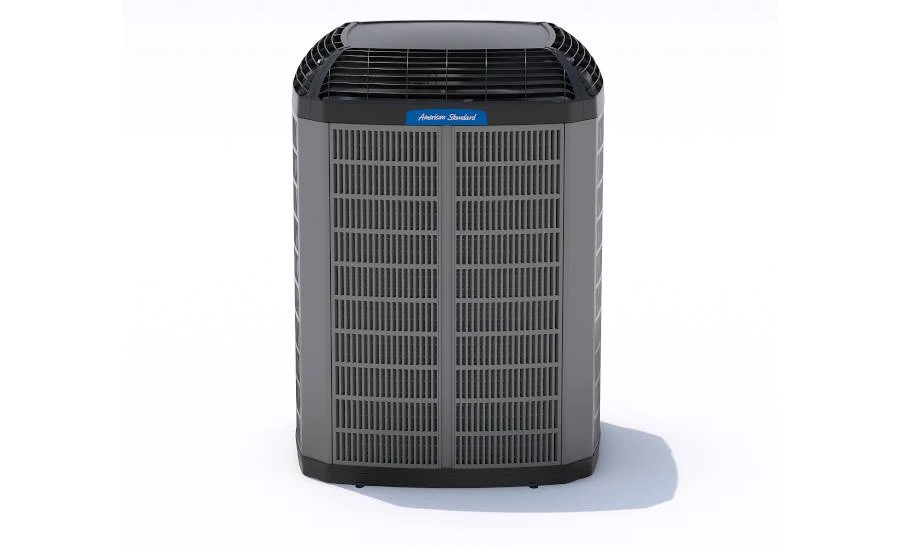
The fundamental engineering tension behind air-source heat pumps has not changed: the colder the outdoor air, the greater the heating load. What has changed is the equipment's ability to meet that load. Advances in compressor technology, communicating controls, and physical design now let cold-climate units hold heating capacity well into temperatures that once forced a switch to fossil-fuel backup.
What changed inside the outdoor unit
The compressor is the starting point. Variable-speed compressors in today's cold-climate heat pumps modulate output in response to heating and cooling demand and outdoor conditions, rather than running at a single fixed level. In milder weather the system throttles down; as temperatures drop and the load rises, it ramps up. American Standard's AccuComfort Variable Speed Platinum 20 Cold Climate Heat Pump with AllWeather, for example, provides cooling at outdoor temperatures from 55 to 115 °F and maintains 100% heating capacity down to 5 °F.
That modulation depends on the system knowing how much output is actually needed. The AccuComfort uses American Standard's fully communicating Link system, which lets the outdoor unit, indoor equipment, and controls exchange operating data instead of functioning as isolated components. For the homeowner this translates into finer comfort control and access to indoor-air-quality accessories. For the contractor, Link provides visibility into system operation and enables remote diagnostics, reducing the need for a truck roll at every service call.
Beyond the compressor and controls, cold-climate performance also hinges on how the unit withstands real winter conditions—snow, ice, freezing rain, and the water produced by defrost cycles. The AccuCold-climate unit addresses this with a factory-installed AllWeather top designed for long-term durability in extreme weather.
Field data behind the ratings
Standardized laboratory testing establishes what equipment can deliver under defined conditions, and the AccuComfort Variable Speed Platinum 20 Cold Climate Heat Pump met the U.S. Department of Energy's Cold Climate Heat Pump Challenge performance requirements. American Standard also placed its cold-climate technology into real homes in Minnesota, Montana, New York, Pennsylvania, Wisconsin, and Texas. Across nine field-test units the systems accumulated nearly 18,000 hours of heating runtime, operated in outdoor temperatures as low as −21 °F, and completed multiple full heating and cooling seasons in some of North America's harshest winter climates.
A wider operating window for contractors
The practical effect of these advances is a shift in the question contractors face. In regions where the default answer to "can a heat pump work here?" was once no, the conversation now centres on what a given unit delivers at the home's design conditions, how it should be applied, and what the installation must look like to perform as intended. Cold-climate heat pumps have expanded the operating range in which all-electric heating is a viable option, and the field data from six states and nearly 18,000 heating hours provides the evidence base for that shift.
ORIGINAL SOURCE
ACHR NEWS ↗Visit the original source for additional details.