Industrial refrigeration
KISTI Outlines Direct-to-Chip Cooling Architecture for Hangang Supercomputer
At a November 17 seminar in Seoul, a KISTI engineer detailed the cooling design for the Hangang supercomputer, featuring cold-plate direct-to-chip cooling, one CDU per three compute racks, and a hybrid free-cooling/chiller heat-rejection scheme. The presentation, reported by KHARN, describes a project design case without measured annual savings.
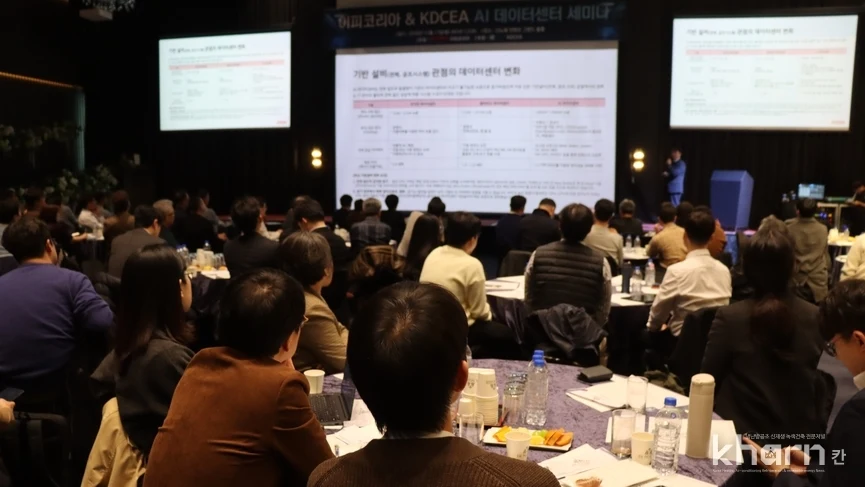
At a seminar held in Seoul on November 17, an engineer from the Korea Institute of Science and Technology Information (KISTI) presented the cooling architecture planned for the Hangang supercomputer, according to event reporting by KHARN.
Core cooling design
The system uses cold plates to remove heat directly from compute components. A single coolant distribution unit (CDU) is sized to serve three compute racks.
Heat-rejection strategy
Cooling towers handle the majority of heat rejection under normal conditions. Chillers are available to cover peak loads during hot summer periods. A buffer tank stabilises the supply temperature as the thermal load varies. Residual heat remaining in the server room is managed by conventional air conditioning.
Scope of the presentation
KISTI described this as a project design case. No measured annual energy savings were asserted in the talk.
ORIGINAL SOURCE
Kharn ↗Visit the original source for additional details.