Science & technology
Why HVAC&R Diagnosis Demands Systems Reasoning, Not Just Equipment Familiarity
Eugene le Roux (FSAIRAC) outlined at the Women in HVAC Leadership Summit why refrigeration troubleshooting is cognitively demanding: limited measurable signals, abstract thermodynamics, and a wide range of faults that produce similar symptoms. He stressed that diagnosis requires interpreting how the condenser, evaporator, compressor, and refrigerant interact rather than replacing the first suspect component.
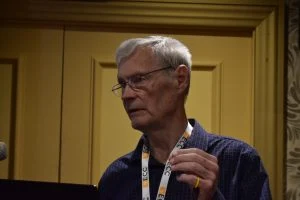
At the Women in HVAC Leadership Summit, Eugene le Roux (FSAIRAC) argued that the technical demands of HVAC&R diagnosis help explain the industry's persistent shortage of skilled technicians. His presentation addressed challenges common to all technicians regardless of gender and centred on the cognitive complexity of troubleshooting refrigeration systems.
Fewer signals than in electrical work
Le Roux noted that thermodynamics and heat transfer sit at the core of HVAC&R work, and both remain abstract in practice. Unlike some areas of electrical work, where design parameters can be read directly from an instrument such as an oscilloscope, refrigeration troubleshooting offers far fewer clear signals. A technician may have only a small set of measurements—refrigerant pressures, for example—to guide an assessment of what is happening inside pipes, tanks, and other components.
A wide and overlapping fault landscape
The potential fault list is broad:
- an underperforming condenser
- air or moisture entering the refrigeration cycle
- an incorrect refrigerant mixture
- a warm compressor
- recurring compressor failures
- excessive oil in an evaporator
- a system that is underfilled or overfilled
Le Roux pointed out that some of these faults manifest as gradual performance changes rather than an obvious visible failure. A building's temperature or humidity may drift out of range; heat transfer may degrade because of fouling on the inside of water tubes or because the connection between an evaporator's fins and tubes is not transferring heat effectively. The technician has to recognise the symptoms, identify plausible causes, and work out where to look next.
Interfacing: the core of the diagnostic challenge
The key difficulty, Le Roux explained, is the amount of "interfacing" a technician must account for: the more components and conditions that affect one another, the more knowledge and judgment troubleshooting requires. A single pressure reading, he stressed, rarely explains a fault on its own. The technician must consider how the condenser, evaporator, compressor, refrigerant, and surrounding conditions interact, then decide where to investigate next.
Troubleshooting, he emphasised, is not a matter of replacing the first component that appears faulty. Le Roux noted that similar symptoms can point to different underlying problems, and that diagnosis ultimately depends on understanding how the parts of the system work together.
What comes next
This is the first article in a series. In the next instalment, Le Roux will examine the controls layer of modern systems and explain why he views complexity as an invitation rather than a barrier.
Written by Eamonn Ryan. Source: RACA Journal.
ORIGINAL SOURCE
RACA Journal ↗Visit the original source for additional details.