Chillers & heat pumps
Dual-Fuel Switchover Is No Longer a Fixed Number: OEMs Push Application-Specific, Dynamic Logic
As inverter-driven and cold-climate heat pumps hold capacity into single-digit outdoor temperatures, manufacturers say the gas-furnace switchover point in dual-fuel systems must be set per application rather than by a universal rule. Daikin, Midea, Lennox, and Rheem outline how replacement cycles, evolving controls, and local utility economics are reshaping how contractors design and sell these systems.
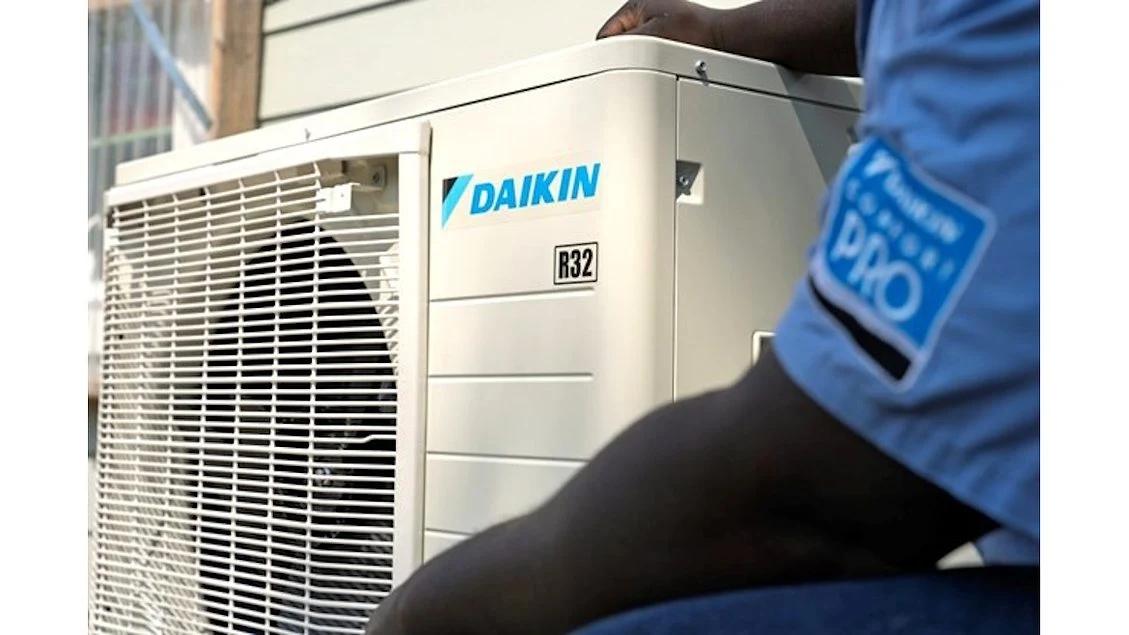
The fixed switchover temperature that once governed dual-fuel systems is giving way to a dynamic, application-specific decision. As inverter-driven and cold-climate heat pumps (CCHPs) now maintain heating capacity well into single-digit outdoor temperatures, OEMs say the gas furnace is shifting from a primary backup to a narrow-temperature safety net, and the logic that triggers the switch must be rethought for each home.
The capability shift narrows the furnace's window
King Tong, senior director of product marketing at Daikin Comfort Technologies North America, noted that the range of conditions in which dual fuel is genuinely necessary has narrowed as inverter-driven heat pumps have become more capable at lower temperatures. In many markets, he said, the heat pump is now the primary heating system and the gas furnace serves only the handful of extremely cold days and acts as backup. He described the change as one of purpose rather than existence: the furnace is still there, but its role has contracted.
Nicholas Orth, director of product management for outdoor equipment at Lennox Home Comfort Solutions, went further, suggesting that in certain markets CCHPs could drive consumers away from any backup heat at all, and he encouraged dealers to consider CCHPs as all-climate solutions.
David Rames, senior manager of product promotion and development at Midea America Research Center, cautioned against assuming that cold climates automatically require dual fuel, pointing out that modern heat pumps deliver heating capacity at much lower outdoor temperatures than previous generations.
Replacement cycles create the entry point
Dual fuel is not always a fresh design decision. Tong observed that the outdoor unit and the furnace often do not reach end-of-life on the same schedule. A homeowner may have a functioning furnace while the outdoor unit is due for replacement, creating an opportunity to introduce a variable-speed inverter heat pump without prematurely retiring the gas equipment.
Daikin's D24V gateway accessory for its FIT system, for example, allows a FIT inverter heat pump to integrate with an existing furnace, creating an inverter-driven dual-fuel system. Tong noted that the indoor evaporator coil will most likely also need to be replaced to match the new outdoor unit.
Rames framed existing gas equipment as another reason to consider dual fuel, explaining that such systems lend themselves well to homes that already have a gas furnace by adding a path for heat-pump-curious homeowners without requiring modifications to the home.
No universal switchover temperature
With heat pumps operating at lower temperatures, contractors must reconsider how they establish the point at which a dual-fuel system switches to gas. The OEM responses converge on an application-specific approach rather than a single universal switchover temperature.
Rames defined the capacity balance point as the point at which the home's heating load begins to exceed the heat pump's available output, and stressed that this balance point varies by climate and equipment. He cautioned against applying rules of thumb developed around older heat pumps to today's inverter-driven systems.
Orth approached the decision from two perspectives: economics and comfort. A homeowner prioritizing comfort may choose a higher balance point, while an economically driven strategy depends on local gas and electric rates. Variable electric rates can complicate the calculation, particularly when electricity costs more during peak hours.
Jeff Goss, director of product management for Residential Systems at U.S. Air, Rheem North America, said the switchover temperature should be based on the individual application, and that the easiest way to determine it is to evaluate the home's heating load and choose the most cost-effective temperature for that system.
Tong flagged the most common installation error: setting the switchover temperature too high and letting the furnace take over before it needs to, which reduces much of the efficiency the homeowner paid for. Orth described a related issue in which contractors familiar with traditional heat pumps apply a more conservative balance point to cold-climate equipment, partly to avoid callbacks, thereby undermining the reason for paying more for the CCHP.
Controls are moving from fixed to dynamic
Rames outlined three basic control approaches for dual-fuel switching: an outdoor-temperature sensor triggers the switch to gas below a predetermined set point; a thermostat timer initiates the switch if the heat pump runs for a specified period without reaching the set point; or the system compares the thermostat set point with actual room temperature and switches to gas when the room falls below a predetermined amount.
Goss described a more data-driven approach in which advanced controls and connectivity incorporate indoor and outdoor temperatures, humidity, weather information, and anticipated load requirements. He said the increased availability of data allows the system to make more intelligent operating decisions by continuously evaluating current and anticipated load requirements.
Tong said Daikin sees communicating controls paired with modulating heat pumps taking the concept further. Those systems can consider outdoor conditions, the heat pump's actual delivered capacity, and increasingly, local utility economics. In that model, the dual-fuel system uses either gas or electricity depending on whichever fuel is most efficient and cost-effective at that moment, rather than a one-time setting established at install.
The progression, in short, runs from a fixed outdoor-temperature switchover toward a system that makes a more dynamic decision based on real-time operating conditions.
Design the system as a whole
The flexibility of dual fuel means contractors need to look beyond individual components. Goss said accurate heating-load calculations are critical, as is properly sizing the heat pump and accounting for the furnace's capacity, local temperatures, and the selected switchover strategy. He emphasized looking at the system as a whole rather than treating the heat pump and furnace as two independent pieces of equipment.
Rames similarly stressed compatibility when pairing a heat pump with an existing gas furnace, noting that contractors need to ensure the indoor and outdoor equipment and controls work together seamlessly as a complete system. As inverter-driven heat pumps become more common, he added, contractors need to understand how the equipment operates so they can configure the system correctly and deliver its intended performance.
Selling the application, not the product
The OEMs also pointed to different ways contractors can frame the sales conversation. Rames highlighted existing gas furnaces as a natural entry point for dual fuel. Goss said contractors should start by understanding the homeowner's priorities, including energy costs, comfort preferences, existing infrastructure, and system expectations, and use those factors to determine whether the combination makes sense for the particular application rather than treating dual fuel as the answer for every home.
Tong summarized the shift: communicating controls can increasingly consider outdoor conditions, the heat pump's actual delivered capacity, and local utility economics when determining which heat source to use. That makes the contractor's role less about choosing a fixed switchover point and more about understanding the equipment, the home, and the economics behind the system. Rames added that this requires contractors to understand the improved performance and heating capacity of today's heat pumps compared with previous generations, as well as have a breadth of knowledge about local utility rates and the home itself, and that this understanding helps the industry as a whole determine when dual-fuel makes the most sense.
Source: ACHR NEWS, October 30, 2026. By Dana Slone.
ORIGINAL SOURCE
ACHR NEWS ↗Visit the original source for additional details.